Best AI Sales Training Software 2026: 17 Tools Compared (Highspot, Mindtickle, Gong + 14 more)
Best AI Sales Training Software 2026, honest pricing, G2 scores, and who each one's actually for. No paid placements. Updated 2026.

Posted by
Secondbody.ai
Published by
Last Updated
AI sales training software has gone from "nice to have" to "how do reps actually practice now." This is an honest comparison of 17 AI sales training platforms in 2026 — Highspot, Mindtickle, Gong, SecondBody, and 13 others — with real pricing, G2 scores, and who each one is actually built for.
One thing worth saying out loud: SecondBody sells AI sales training software. You're reading this on our site. But every other roundup we read was written by a vendor who ranked themselves at #1. So we're going to do the opposite — show you the trade-offs honestly, including ours.
SecondBody is the voice-first AI roleplay platform built for daily rep practice at team scale — transparent pricing, unlimited seats, manager tooling that actually reduces coaching workload.
So when our marketing team floated the idea of writing yet another sales training software comparison, the honest first reaction was: the internet already has enough of this genre.
What the internet doesn't have is a vendor willing to put itself on a list with its competitors and tell buyers, without squirming, where they'd be better off buying something else. So that's what we're going to try to do here. SecondBody makes the cut. We'll tell you what we do well, where we fall short, and which of our twelve competitors you should probably buy instead if your situation calls for it.
You came here to make a decision. We're going to try to save you six weeks of demo hell.
Why AI sales training software stopped being optional in 2026
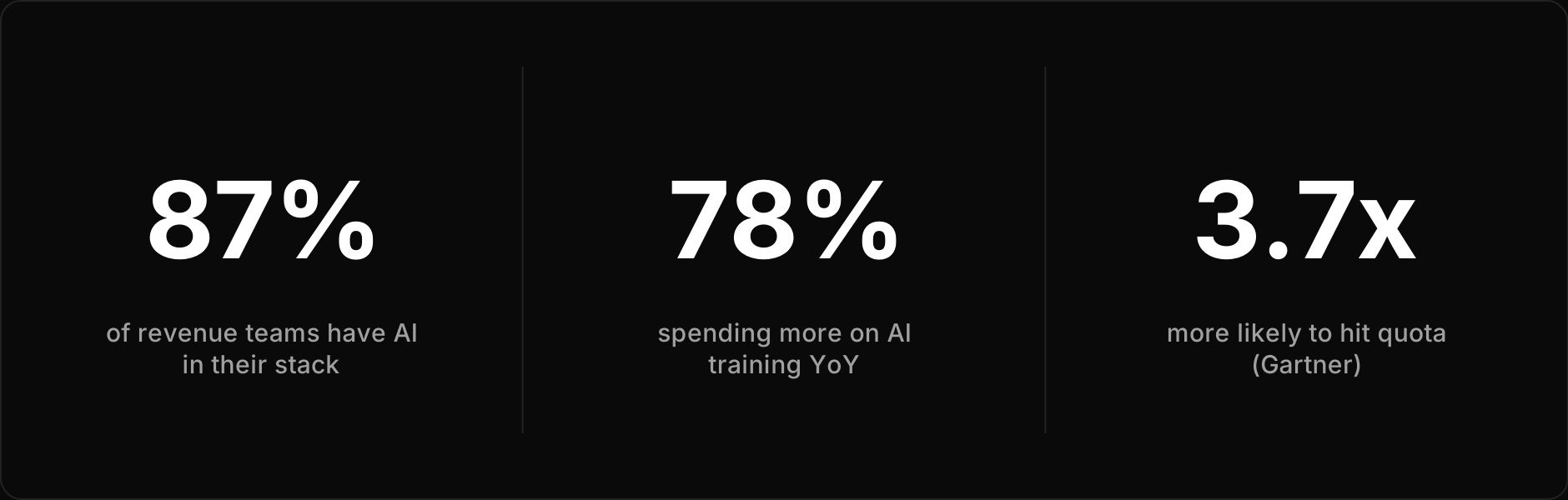
You probably already know that AI sales training stopped being a pilot project. The numbers got embarrassing a while ago. According to recent industry surveys, roughly 87% of revenue teams now include AI tooling in their stack. Gartner's widely cited finding that reps who work well with AI agents are 3.7x more likely to hit quota has become a category benchmark — though, like most analyst stats, it deserves context about the sample and methodology.
Here's what nobody says out loud. Most of the AI sales coaching and roleplay tools in this comparison do basically the same thing on the surface. Reps practice a conversation with an AI buyer. The AI scores the rep. A report goes to the manager. Same three sentences describe every product on this list. The real differences are buried in the fine print: how the AI behaves when a rep goes off script, whether scoring is methodology-aware or just counts filler words, whether managers get something useful or just another dashboard, whether pricing scales linearly with headcount or quietly stops being friendly at 50 reps.
One concept worth flagging because it's shaping how the sharper revenue leaders are buying right now. We call it the Execution Gap. It's the distance between what your reps know to do and what they actually do when a real prospect pushes back on price in minute four of a cold call. You close that gap with repetitions, not knowledge. The rep who's handled that objection twenty times in simulation is the rep who doesn't freeze. Every tool below claims to close the Execution Gap. A few of them actually do.
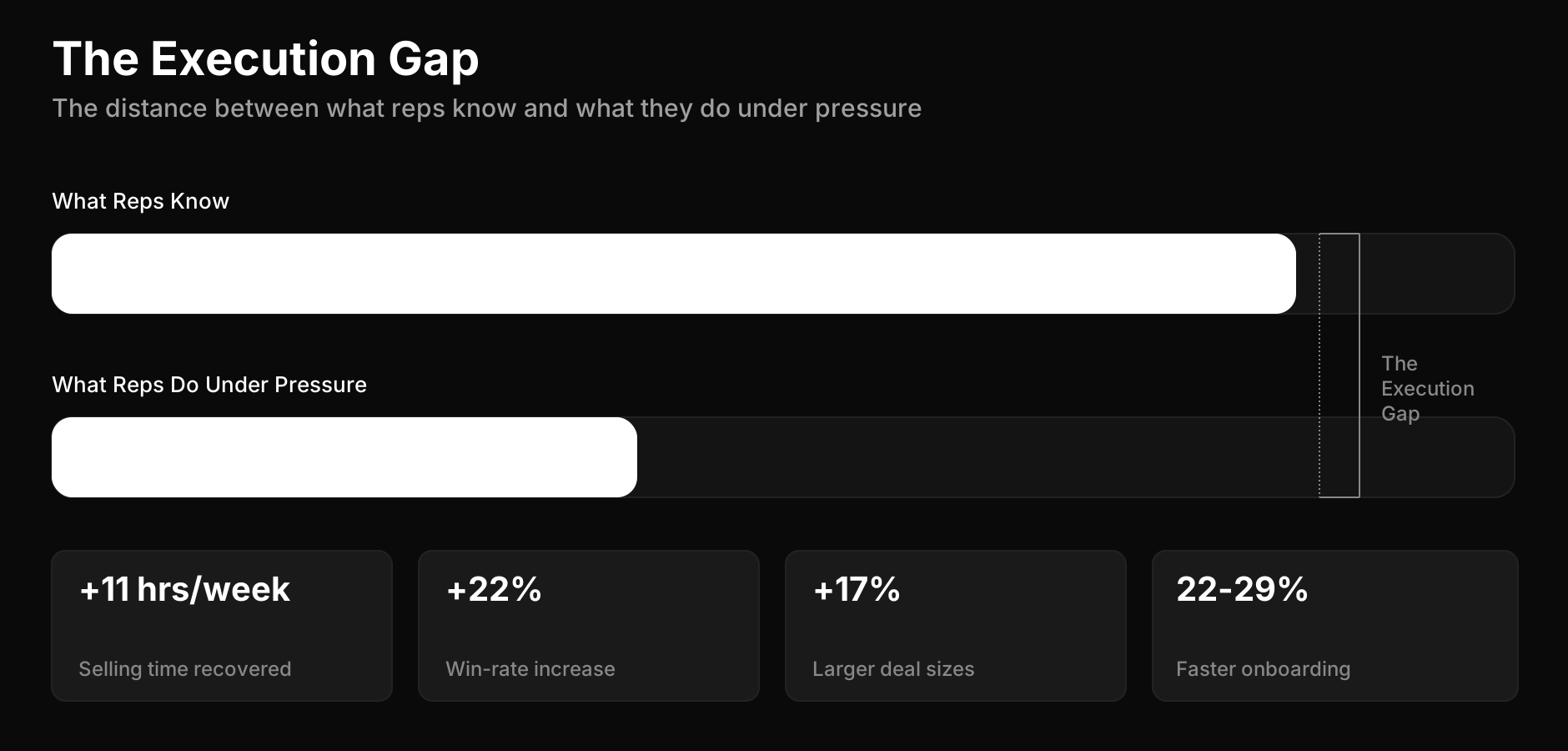
A handful of numbers you should walk in knowing, because vendors will quote them at you anyway:
Reps recover about 11 hours a week once AI takes over admin. Top implementations push that to 40% more actual selling time.
AI-trained teams report 22% win-rate lifts and 17% larger average deal sizes. Those are blended numbers from vendor case studies, not a single study.
Ramp time drops 22–29% in published customer data. Honestly, this is the benchmark we trust most — easy to measure, hard to fake.
77% of AI-equipped teams hit quota vs. 69% missing without it. The correlation is real. The causation is fuzzier than vendors admit, because well-run teams buy better tools and hit quota.
Typical payback lands at 12–18 months. Six if your change management is unusually disciplined.
There's a trap here worth naming. You automate your reps' admin, they get 11 hours back, and then they spend them wrong. More LinkedIn scrolling. More "pipeline hygiene" meetings. More Slack. The tools that actually move numbers are the ones that redirect those hours into something specific and high-leverage — practice, mostly. Not more dashboards. The category is way past needing more dashboards.
Alright. Let's get to it.
The 17 best AI sales training, coaching and roleplay tools in 2026 — at a glance
No. | Tool | Best for | Starts at | What's actually different about it |
|---|---|---|---|---|
1 | SecondBody (Rory) | SDR/BDR/AE teams who want daily voice practice | Voice-first, built for habit not certification | |
2 | Second Nature AI | Global, multi-language enablement | ~$30–40/user/mo | 20+ languages with cultural nuance |
3 | Hyperbound | Mid-market with existing call data | $24–69/user/mo | Personas built from your real calls |
4 | Mindtickle | Enterprises consolidating five tools into one | Contact sales | The enablement incumbent; deepest G2 footprint |
5 | Allego | Teams that also need buyer-facing deal rooms | Contact sales | Digital Sales Rooms; rated easiest to use |
6 | Seismic (now includes Highspot) | Very large enterprises post-merger | Contact sales | The biggest footprint after the Feb 2026 acquisition |
7 | Showpad (includes Brainshark/Bigtincan) | Field sales on mobile | Contact sales | Content + coaching + video roleplay on one app |
8 | Gong AI Trainer | You already pay for Gong | Contact sales | Practice built from your own winning calls |
9 | Quantified AI | Pharma, medtech, regulated industries | Contact sales | Avatars that can see physical materials; audit trail |
10 | Replicate Labs (formerly TrainThis.AI) | Gap Selling or MEDDPICC teams | Contact sales | Native methodology partnerships |
11 | Yoodli | Individual reps; tight budgets | Free → $11–28/mo | A real free tier that isn't a trap |
12 | Solidroad | Hybrid sales + support teams, BPOs | Contact sales | YC W25; QA on live calls, not just practice |
13 | SalesHood | Teams that already learn peer-to-peer | Contact sales | Peer learning with AI on top |
14 | Highspot (now Seismic) | Enterprises who evaluated Highspot pre-Feb 2026 | Contact sales | Copilot AI + content analytics; now Seismic's AI backbone post-acquisition |
15 | Wonderway | RevOps-led orgs with mature CRM data | Contact sales | Identifies skill gaps from deal outcome data, not manager observation |
16 | SymTrain | Contact centers + compliance-heavy inside sales | Contact sales | Simulation-first certification at scale; audit-trail by design |
17 | Triple Session | Self-funded reps and budget-constrained teams | ~$39/user/mo | Micro-coaching + productivity tooling; free tier that actually works |
Five of these are purpose-built AI sales roleplay tools (SecondBody, Second Nature, Hyperbound, Quantified, Solidroad). Four are sprawling enablement platforms with a roleplay module inside (Mindtickle, Allego, Seismic, Showpad). One is a conversation-intelligence tool that added roleplay (Gong). One is a methodology-native AI sales coach (Replicate Labs). One is a communication coach with a real free tier (Yoodli). One is built around peer learning (SalesHood). One is an enablement platform mid-merger — Highspot, now absorbed into Seismic, covered separately because thousands of teams are still mid-evaluation. One is CRM-driven coaching for RevOps-led orgs (Wonderway). One is simulation-first certification for high-volume call teams (SymTrain). One is micro-coaching and productivity for budget-conscious reps (Triple Session).
Pick by the problem. Not by the logo.
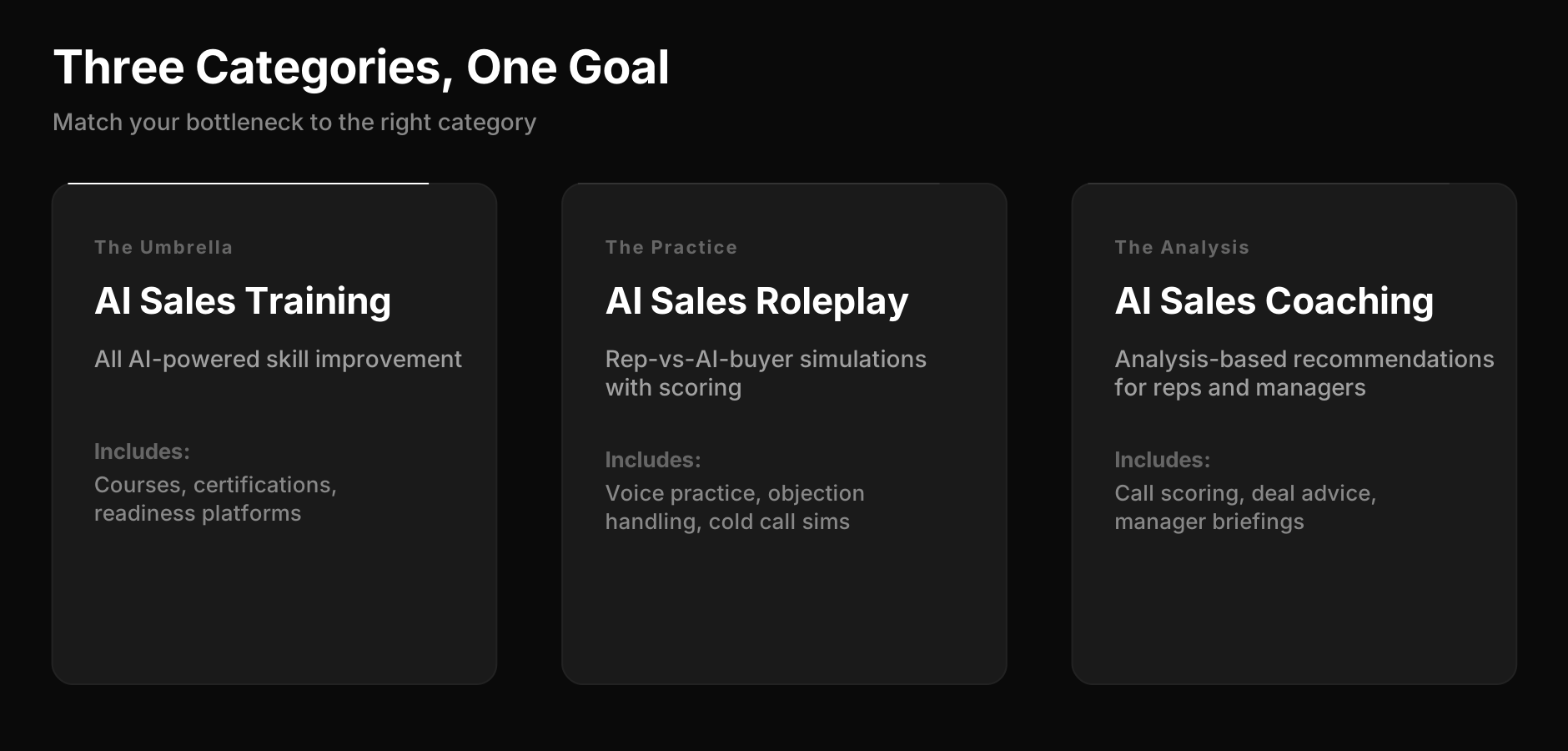
AI sales training vs AI sales coaching vs AI sales roleplay — what's the actual difference?
Three terms that get used interchangeably by vendors, and the distinction matters when you're comparing tools, because it tells you what problem each one is really built to solve.
AI sales training software is the umbrella term. It covers anything that uses AI to improve rep skill — pre-recorded courses with AI-graded assessments, live practice, real-call analysis, all of it. Mindtickle, Seismic, Showpad, Allego, and SalesHood are training platforms first. Roleplay is one of several modules inside them.
AI sales roleplay tools are the narrower, faster-moving category. These are the tools where a rep talks to an AI buyer in a simulated conversation and gets scored in real time. SecondBody, Second Nature, Hyperbound, Quantified, and Solidroad are pure-play AI sales roleplay platforms. If "my reps need reps before they pick up the phone" is the sentence in your head, these are the tools you actually want.
AI sales coaching tools sit between the two. They analyze what reps are doing (either in practice or on live calls) and generate specific coaching recommendations — for the rep, for the manager, or both. Gong AI Trainer, Wonderway, and Replicate Labs lean into this framing. SecondBody's pre-1:1 manager briefings sit in this bucket too.
A lot of buyers come in searching for "best AI sales coaching software" when they actually need roleplay, or searching for "AI sales roleplay platform" when they actually need a full readiness suite. Getting the category right before the demo saves weeks. If you only remember one rule: if your bottleneck is "reps aren't practicing enough," buy a roleplay tool. If your bottleneck is "managers can't coach at scale," buy a coaching tool. If your bottleneck is "we have no structured learning at all," buy a training platform.
How we actually evaluated these
Worth being upfront about what went into the scoring, so you can decide how much weight to put on it.
What we did: read every tool's homepage and pricing page, pulled their G2 reviews and noted the patterns (not just the averages — the patterns), checked their public customer logos, verified their founding year and funding stage where we could find it, and compared what each vendor claims against what their customers say in Reddit threads and LinkedIn posts. For the tools that compete directly with SecondBody, we also looked at how they handle off-script practice, whether their scoring respects a specific sales methodology, and what their manager tooling actually does beyond cosmetic dashboards.
What we didn't do: accept vendor self-ratings, take a paid placement from anyone, or run a stopwatch on every feature. This isn't a lab review. It's a founder-team opinion informed by a year of watching the category evolve, talking to buyers, and building a competitor.
Three things mattered most in the scoring:
Does the AI behave like a real buyer when a rep improvises? A lot of these tools fall apart the moment a rep says something the grader didn't expect. The good ones adapt. The bad ones penalize.
Can a manager of 30 reps actually use it without becoming a full-time reviewer? Most of the category was built assuming managers will listen to every session. They won't. Nobody does.
Is the pricing honest about what happens at scale? Transparent-pricing tools (there are four on this list) let you model a budget in Excel. Opaque ones cost you six weeks of sales cycles and a finance meeting.
Where a tool got acquired, merged, or rebranded in the last six months — and a surprising number did — we flagged it.
Okay. Let's go.
1. SecondBody (Rory) — Voice-first practice, every day, unlimited seats
secondbody.ai · $30/user/mo Pro (or ~$25 annual) · Enterprise on request · Founded 2023, New York
We'll handle our own section first, out in the open, so the rest of this list reads cleanly.
SecondBody exists because our team got tired of watching reps "complete" a four-hour onboarding course, pass the quiz, and then freeze on the first real cold call thirty minutes later. Knowledge wasn't the problem. Reps were. Nobody gets good at a hard conversation by watching a video about hard conversations. You get good at it by having the conversation, badly, a hundred times, until it stops feeling dangerous.
So that's what we built. Rory is our AI coach. Reps practice voice-first — actually speaking the way they'll sell — in short sessions that fit into the gaps in their day. Before the first dial. During a coffee break. In the ten minutes before a discovery call when they need to warm up. The focus is cold opens, discovery, objection handling, closing moments. The conversations where deals get decided. Rory scores the rep, surfaces what they flubbed, and tells the manager which reps need which kind of coaching this week, so coaching hours go where they'll actually move the number.
What SecondBody does well:
Voice first, not text first with voice bolted on. A lot of competitors started as chatbots and stapled voice on top when buyers began asking for it. SecondBody didn't. Reps are speaking from the first minute of their first session. That matters because muscle memory is medium-specific. A rep who's only practiced typing isn't a rep who's practiced calling.
Unlimited seats at the $30 Pro tier. This is the one that makes CFOs look up. Every other tool on this list (except Yoodli) scales linearly with your headcount, which means practice becomes a budget conversation at exactly the moment you want it to become a habit. Our take: practice shouldn't be rationed. Whether your team is 12 people or 240, the Pro tier is the same price per seat and you can roll it out to everyone on day one.
Public pricing. Nine of the 17 tools on this list hide everything behind a "contact sales" button. That's fine for an enterprise motion, but it's exhausting if you're just trying to build a budget model. SecondBody publishes its price. You can see it, compare it, and decide in about four minutes.
Manager tooling that actually reduces work. The pre-1:1 briefing is the feature the team here is most proud of. Before a manager walks into a 1:1, they get a one-page summary: these are the reps you should coach this week, these are the skills they're avoiding practicing, here's the specific feedback they need. It turns coaching into a targeted, surgical activity instead of a calendar obligation. One manager can actually coach 20 or 30 reps this way. Which is the whole point.
Methodology-native scoring. Grading is mapped to SPIN, MEDDIC, and Sandler — the playbooks teams actually run. Not a rubric invented in a Notion doc.
Habit mechanics that stick. Streaks, team challenges, weekly quests. Sounds gimmicky until you look at the adoption data. Teams using the streak features practice 3–4x more than teams that don't.
Where we're not going to blow smoke:
We're newer than the incumbents, and that's the point. SecondBody was built on the current generation of voice AI from day one — not retrofitted onto a 2018 enablement codebase. That's why reps hit daily practice habits in week one instead of week twelve. Analyst coverage follows category maturity; our customers aren't waiting for a Magic Quadrant to see ramp time drop.
Native Salesforce and HubSpot integrations ship in 2026. Today SecondBody connects to Aircall, Cloudtalk, Momentum.io, Fathom, and TeamTailor — the tools reps actually live in before the CRM entry. If you need pipeline context inside coaching on day one, ask us about the integration roadmap.
Customer references: Cyera, plus others available under NDA. We'll connect you with a reference on request.
CRM integrations are in development. Salesforce and HubSpot are actively being built. Today, SecondBody integrates with Aircall, Cloudtalk, Momentum.io, Fathom, and TeamTailor. If native CRM pipeline context inside coaching sessions is a day-one requirement, factor that into your evaluation timeline.
Our public references are Big. Cyera is our most visible named customer right now (shout-out to Andrew Froning, their Director of Global Sales Development), and we have additional references we can share under NDA during an evaluation. We're building the case study library in real time. If you want to talk to a customer before you buy, ask us — we'll connect you.
Who this is actually for: SDR, BDR, and early AE teams who want daily voice practice as a real habit, without per-seat pricing that kills adoption the moment the team tries to scale it. Also: teams where the CFO has started asking pointed questions about why enablement licenses are outpacing headcount. Start here if you value transparent pricing and manager scalability, and if you're willing to run a tool that's greater than the incumbents.
2. Second Nature AI — The multi-language veteran
secondnature.ai · ~$30–40/user/mo (contact sales) · G2 ~4.5
Second Nature was one of the first vendors to take AI roleplay seriously, and the product shows its age in the best way. Polished. Mature. Enterprise-ready. Their signature asset is a video avatar named Jenny, and their real moat is languages — 20+ of them, with cultural adaptation that isn't just Google Translate. If you're running a global enablement team and the alternative is buying one vendor per region, Second Nature collapses that problem into a single contract.
What's good:
Genuinely multi-language (20+), with cultural nuance rather than mechanical translation
AI-assisted scenario builder — describe a scenario in plain text, get a playable roleplay in minutes
LMS integrations enterprise L&D buyers actually care about (SCORM, LTI, Workday, Adobe)
Mature platform with deep customer references
What's annoying:
The AI penalizes reps who go off script. Reviewers report this consistently — if a rep improvises in a way the grader wasn't expecting, the score drops even when what they said was actually fine. That's a product decision that made sense in 2022 and feels dated now.
Complaints about inconsistent grading on identical answers (a hard problem in this category, but one the incumbents should be further along on)
Real onboarding curve without a dedicated L&D person; rollouts run slower than the sales team will promise
No self-serve tier. Pricing needs a conversation.
Pick this if: you're running global enablement across four or more languages and you have the L&D resourcing to drive adoption.
3. Hyperbound — Built on 2M+ hours of real B2B calls
hyperbound.ai · $24/user/mo (SMB) → $69/user/mo (Growth) · G2 4.9
Hyperbound has grown quickly, and a lot of that growth comes from their data moat: the product is trained on two million+ hours of actual B2B sales calls, and it can build AI buyer personas that mirror your real ICP if you give it access to your Gong or Chorus library. The practice-to-live-call loop is well-designed. Their G2 score (4.9) reflects strong user satisfaction.
What's good:
Low response latency — reps report sessions that feel close to a real cold call
Personas built from your data transfer to reality rather than feeling synthetic
Zero overage fees — unlimited practice under the seat price, no per-minute metering
25,000+ reps at Sendoso, Cognism, Uplift, and others
Published public pricing, which is rare in this category
What's less good:
Not cheap once you hit the Growth tier
Scenario customization workflows have rough edges in reviews (bot management in particular)
The "built from your data" value only unlocks if you have recorded calls — gates early-stage teams
Manager tooling is thinner than we'd like. Hyperbound is built around the rep, not the manager of 30 reps.
Pick this if: you're mid-market, you already have a Gong or Chorus library, and you want practice that mirrors the actual prospects your team is calling.
4. Mindtickle — The enablement incumbent
mindtickle.com · Contact sales · G2 4.7 (2,200+ reviews), Leader badge in sales onboarding
Mindtickle isn't really a roleplay tool. It's a full revenue readiness platform — training, coaching, certification, roleplay, analytics, all stitched together. For large enterprises tired of running five separate enablement contracts, that consolidation is real money. And the G2 footprint is enormous: 2,200+ reviews is the largest in the category by a mile, which makes Mindtickle the safest procurement choice for buyers who need to defend the purchase to a CFO who's never heard of any of these companies.
Worth noting: Mindtickle's own 2026 listicle of "best AI roleplay tools" puts Mindtickle at #1. Which, fine — most vendors would do the same in their shoes. But it should tell you how seriously to take that listicle.
What's good:
A genuinely dynamic AI buyer that asks real follow-ups instead of reading from a branch tree
Deep analyst coverage (Forrester, G2, the usual suspects)
Certification workflows that matter in regulated enterprises
The unified training + coaching + roleplay story is real — it does save tool sprawl
What's annoying:
The dashboard is dense. Reviewers don't just mention this, they complain about it in paragraphs. Slow navigation, information overload, performance issues in some tenants.
Implementation is a three-to-four-month affair before anything meaningful happens
Enterprise-territory pricing — fine if you're an enterprise, wrong if you're not
Real learning curve for managers configuring the system
Pick this if: you're 500+ reps, you're consolidating three or more enablement tools, and you have the implementation muscle to make it real. SecondBody vs. Mindtickle →
5. Allego — Enablement plus Digital Sales Rooms
allego.com · Contact sales · G2 4.6 (660+ reviews), rated #1 for ease of use in its category
Allego does something most of the others don't: alongside training and roleplay, they ship Digital Sales Rooms, which are branded microsites reps use to engage buyers during the actual sales cycle. So you're not just training the rep, you're giving them a buyer-facing artifact to use afterwards. For enablement leaders whose remit spans "train the rep" and "equip the rep with something to send the prospect," that's a meaningful hook.
And G2 rates Allego #1 on ease of use in the category — which, if you've ever watched adoption stall on a technically impressive tool because the UX was hostile, is maybe the most underrated quality in this market.
What's good:
DSRs are a genuine differentiator nobody else on this list ships
Voice cloning and translation are live
Customer satisfaction and retention scores are high
The platform feels modern in a way some of the older enablement suites don't
What's less good:
In-tool search and content discovery is a persistent reviewer complaint
Advanced features have a real learning curve despite the "easiest in category" rating
Deploying DSRs + roleplay + content management at the same time is an organizational change project, not a tool rollout
Expensive for mid-market teams
Pick this if: you're mid-market to enterprise, you care equally about training reps and giving them buyer-facing assets, and you're willing to drive real change management. SecondBody vs. Allego →
6. Seismic (now including Highspot) — The biggest footprint in the category
seismic.com · Contact sales
Seismic was already one of the two largest enablement platforms on the market, and in February 2026 they bought Highspot. That changed the shape of the category overnight. If you were evaluating Highspot six months ago, you're now evaluating Seismic's combined platform, and the integration of Highspot's Copilot and adaptive learning into Seismic's content stack is still very much in flight.
This is the moment to be cautious, honestly. Mergers this big take 18–24 months to really finish, and in the meantime buyers are left guessing about which roadmap wins, which product managers survive, and which features get sunset. Searches for "Highspot alternatives" are spiking post-merger for exactly this reason.
What's good:
Combined footprint is unmatched — if you want maximum vendor consolidation and analyst coverage in one contract, this is the option
Highspot's Copilot plus Seismic's content discovery and analytics under one roof is genuinely compelling if the integration lands
Deep enterprise references across both legacy products
What's concerning:
Product direction is ambiguous right now
Buyers have told us support quality during the integration has been inconsistent in some accounts
Implementation was already heavy; now it carries the added risk of landing on a product surface that's still being rebuilt
If you need something working in 90 days, look elsewhere
Pick this if: you're a very large enterprise with enough runway to ride out a messy integration in exchange for the biggest footprint on the board. SecondBody vs. Seismic →
7. Showpad (with Brainshark and Bigtincan) — Content, coaching, and video roleplay for field sales
showpad.com · Contact sales
Showpad consolidated with Brainshark and Bigtincan, and the combined platform now gives field sales teams one mobile surface for content, training, and video-based roleplay. If your reps live on their phones walking into dealerships, clinics, or construction sites, Showpad is more defensible than any pure-play roleplay tool because the content distribution story is still the legacy strength.
What's good:
Field mobility is genuinely strong — the legacy Showpad DNA
Video and audio roleplay options, which matters for visual selling (physical product demos, for example)
Voice cloning and multi-language support came over with the Bigtincan integration
One app for content + coaching + practice reduces the number of icons your reps ignore
What's less good:
Post-merger product strategy is still consolidating; buyers report confusion about which module owns which capability (this is three acquisitions stitched together, so it's not surprising)
AI roleplay maturity trails the pure-plays — Hyperbound, Second Nature, and SecondBody all feel more specialized here
G2 coverage is fragmented across the legacy brands, which makes it harder to get a clean read on current product quality
Expensive for SMBs
Pick this if: your reps are in the field, on mobile, and you need one app for the content they show buyers and the training they do between meetings. SecondBody vs. Showpad →
8. Gong AI Trainer — Practice inside the Gong ecosystem
gong.io · Contact sales
Gong's bread and butter is conversation intelligence — recording, transcribing, and analyzing actual calls. AI Trainer is newer and lets reps practice against simulations built from winning call patterns in your own Gong corpus. It's not a replacement for a dedicated roleplay platform. It's an additive module for teams who are already deep on Gong and don't want a second vendor.
For existing Gong shops, this is a natural add-on — zero data migration, and it ties into the call analysis workflows reps already use. The tradeoff is that AI Trainer is still maturing as a practice tool. It's strongest as a supplement to Gong's core conversation intelligence, not as a standalone roleplay platform. Teams that want deep, daily practice may find the roleplay experience thinner than what purpose-built tools offer.
What's good:
Leverages your existing Gong call library with zero data migration
Tight integration with the call analysis and deal review workflows reps already use
Strongest post-call intelligence in the category (legacy Gong strength)
Gong is often already in the stack, which makes procurement easier
What's less good:
AI Trainer is newer and less feature-mature than Hyperbound, Second Nature, or SecondBody
Tied to the Gong ecosystem — not usable without Gong itself, which is a sizeable line item
Practice experience is less voice-native than specialized roleplay tools
Gong's own 2026 listicle of "best sales enablement tools" is narrative-only (no comparison table), was originally published in August 2022, and leans heavily on Gong as the obvious answer — which is a reasonable proxy for how much editorial weight to put on their training claims
Pick this if: you already pay Gong a meaningful amount and you want practice stapled onto your existing workflow without introducing a second vendor. SecondBody vs. Gong →
9. Quantified AI — Compliance-first, for regulated industries
quantified.ai · Contact sales · G2 ~4.5
Quantified is the tool you pick when legal has a seat on your enablement committee. It's built for pharma, medtech, finance, and insurance — environments where regulators care about what reps are saying to prospects and you need a defensible audit trail to prove it. The standout feature is AvatarVision, which lets AI avatars actually see the materials reps hold up during a simulation (product samples, whiteboards, screen shares). It's the closest thing on the market to a compliant pharmaceutical field rep rehearsal.
What's good:
The only platform on this list where avatars process visual materials, not just audio
ComplianceGuard layers brand and regulatory rules on top of scoring so the audit trail writes itself
SOC 2 Type 2, with private AI model options for the most sensitive deployments
Enterprise references in the names you'd expect — Novartis, Bayer, Sanofi
What's less good:
Enterprise-only — not a realistic fit below roughly 1,000 reps
Pricing is opaque and almost certainly premium (budget five to six figures annually)
Heavy implementation that rewards customization
Wrong tool for general B2B SaaS SDR teams — you'd be paying for compliance infrastructure you don't need
Pick this if: "compliant audit trail" or "SOC 2 Type 2" is on your RFP and you're in pharma, medtech, finance, or insurance.
10. Replicate Labs (formerly TrainThis.AI) — Methodology-native coaching
replicatelabs.ai · Contact sales
Replicate Labs is a newer London-based entrant, rebranded from TrainThis.AI, with a personalised AI coach named Cate. The interesting thing is what they're not doing: they're not selling a generic rubric that pretends to fit every methodology. They have explicit partnerships with Gap Selling and MEDDPICC, and Cate's feedback maps to those frameworks natively. If your team runs one of those methodologies and you're tired of bolting a generic roleplay tool onto your specific playbook, this is the closest thing to a methodology-native product on the market.
What's genuinely useful:
Methodology-native coaching (Gap Selling, MEDDPICC) instead of generic rubrics
The difference shows up in feedback quality — Cate talks about the specific Gap or MEDDPICC component a rep missed, not generic "you could have asked better discovery questions" slop
In-workflow coaching, SMART goal setting, and call review in one product
What's risky:
Early-stage startup — limited case studies, no serious G2 footprint, no analyst coverage
If you're not running Gap Selling or MEDDPICC, the methodology advantage evaporates and you're left with a newer product competing against Hyperbound and SecondBody on features
Product feature depth still catching up to larger vendors
Opaque pricing
Pick this if: your team is genuinely committed to Gap Selling or MEDDPICC and you're willing to bet on an early-stage vendor for methodology fidelity.
11. Yoodli — The communication coach with a free tier that actually works
yoodli.ai · Free → ~$11/mo Pro → ~$28/mo Advanced → Enterprise · G2 4.6 (1,200+ reviews)
Yoodli is the only tool on this list with a genuinely usable free tier that an individual rep can sign up for without asking their manager. That matters more than the category treats it. Not every rep wants to wait for their enablement team to buy a $50-per-seat tool before they start improving. Some of them want to practice tonight.
It's more communication coach than sales-methodology grader. The scoring leans into pacing, clarity, confidence, and filler words, which are the things reps improve fastest and managers never have time to coach. For teams where communication quality is the actual bottleneck — and if you run a young SDR team, it often is — that focus is right. Google, Sandler, and Korn Ferry all use it. 1,200+ G2 reviews is a lot for an affordable tool.
What's good:
Free plan genuinely usable for individual reps
Pro tier at ~$11/mo is the most affordable serious option in the category
Customizable personas and rubrics to align with your sales framework
Enables asynchronous certification without burning manager hours on live sessions
What it's not:
A replacement for a methodology-native roleplay platform. Yoodli tells you how you spoke. It's lighter on what you said.
Primarily English; multi-language support is thin compared to Second Nature
Smaller sales-specific user base; more generalist than vertical
Worth noting: Yoodli's own "top 5 roleplay platforms" article on their blog is from November 2024, which tells you where roleplay sits in their product priorities
Pick this if: budget is genuinely the blocker, you're at the early end of your AI training journey, or you want to equip individual reps with something before your enablement team finishes their RFP.
12. Solidroad — YC-backed, for hybrid sales + support + QA
solidroad.com · Contact sales · YC W25, Dublin
Solidroad is the newest tool on this list. Y Combinator W25 batch, Dublin-based, and they've done something the pure-play sales-roleplay tools haven't: they serve customer-facing teams beyond sales. Customer success, support, and contact-center agents all get the same AI practice plus QA treatment. And here's the hook: Solidroad layers 100% conversation QA on top of live interactions, not just practice sessions. Every real call your reps or agents take can get scored automatically. That's a different value proposition than "we'll let your reps practice."
If you run a hybrid sales-and-support org, or a contact-center-adjacent operation (BPOs, inside sales outsourcing, high-volume inbound), Solidroad is the only tool on this list actually designed for that blended use case. The YC W25 stamp is real credibility for an early-stage vendor.
What's good:
Covers sales, customer success, and support in one product — rare in this category
100% conversation QA on live interactions, not just practice sessions
YC W25 backing adds credibility
Strong fit for BPOs, contact centers, and high-volume inbound teams
What to watch:
Very new; public case studies are thin, G2 footprint almost nothing yet
Product breadth (sales + support + QA) could mean shallower depth in pure B2B sales practice than a specialist like Hyperbound or SecondBody
Opaque pricing
Some buyers misspell it as "Solid Road" in search — worth noting if you're hunting for them
Pick this if: you run a hybrid sales and support operation, a BPO, or a high-volume inbound team and you need practice plus live-call QA in one platform.
13. SalesHood — Peer learning with AI on top
saleshood.com · Contact sales · Gartner Magic Quadrant leader
SalesHood takes a different bet than every other tool on this list. Instead of putting reps in front of an AI, it puts reps in front of each other. Reps record themselves responding to scenarios, submit the recordings, and their peers (and managers) score the submissions. AI sits on top — surfacing the best submissions automatically, flagging patterns, recommending coaching. But the cultural DNA is peer-to-peer learning, not AI-as-coach.
For teams where the rep community is already strong, this is genuinely powerful. Tight SDR cohorts. Sales kickoffs. Product launches where everyone's learning the new pitch at the same time. SalesHood's peer-based model creates cultural adoption faster than a tool that feels like individual homework. Gartner Magic Quadrant recognition gives the procurement team something to point at.
What's good:
Peer learning model builds team cohesion alongside individual skill
Gartner Magic Quadrant recognition and real enterprise credibility
Strong for product launches, sales kickoffs, and cohort-based learning
AI layer surfaces best-practice submissions automatically
What it isn't:
An AI-first product. Peer scoring adds manager and peer workload that a pure AI tool removes.
Less useful for teams with high SDR turnover or geographically scattered reps who don't have tight community ties
AI roleplay depth isn't the primary focus — it's a readiness and content platform with AI features
SalesHood's own 2026 "top sales enablement platforms" article covers only six tools in 1,300 words, which is either commendable brevity or a narrow view of the category, depending on how you read it
Pick this if: your team already learns peer-to-peer and you want to give that culture some AI-powered structure rather than replace it with a tool.
14. Highspot — AI-powered enablement, now inside Seismic
· Contact sales · G2 4.7 (2,500+ reviews) · highspot.com
Highspot spent five years building one of the two most-used sales enablement platforms on the market before Seismic acquired it in February 2026. If you evaluated Highspot last year and liked what you saw, you're now buying Seismic — but the product that earned those 2,500 G2 reviews isn't going away overnight, and it's worth understanding what made it worth acquiring.
The core Highspot proposition was always content + training + AI guidance in one place. Copilot, their AI layer, surfaces the right content to reps mid-deal, scores practice sessions, and flags skill gaps without managers having to pull reports. That's now Seismic's AI backbone.
The honest framing for 2026: Highspot-the-standalone-product no longer exists. If you want what Highspot was, evaluate Seismic and ask specifically which modules came from Highspot and which are legacy Seismic. The consolidation is still live.
What was genuinely good:
Copilot AI surfaces relevant content in-context during live deals — not just post-call
One of the cleanest UI experiences in the enablement category; rep adoption was consistently higher than comparable platforms
Content analytics (what reps actually open and share with buyers) were the best in class
2,500+ G2 reviews with a 4.7 rating means real customer validation at scale
What to watch now:
Post-acquisition roadmap is still being defined — you may be buying a product in transition
Buyers who signed with Highspot in late 2025 are reporting ambiguity about their account team and support structure
Pricing conversations are now Seismic pricing conversations — expect enterprise territory
If the content management depth was the main draw, ask whether that module survives the merger intact
Pick this if: You evaluated Highspot before February 2026 and want to pick up where that evaluation left off — but go in knowing you're now in a Seismic deal, and verify the Copilot features you cared about are on the roadmap.
SecondBody vs. Seismic (Highspot) →
15. Wonderway — CRM-driven coaching, built for RevOps-led orgs
· Contact sales · G2 4.6 · wonderway.io
Wonderway takes a different approach to the "how do we know which reps need coaching?" problem. Instead of asking managers to watch recordings or sit through dashboards, it connects to your CRM and works backward from deal outcomes — identifying which behaviours and skill gaps correlate with lost deals, then surfacing targeted coaching for the reps who need it most.
It's a product built for revenue operations leaders as much as sales managers. If your RevOps team already lives in Salesforce and is already asking "which rep behaviours predict churn in pipeline," Wonderway is the tool that answers that question with a coaching prescription instead of a spreadsheet.
Founded in Stockholm in 2020, Wonderway has built solid traction in European mid-market SaaS — which shows up in both the customer references and the product's cultural sensitivity to the way European GTM teams structure enablement.
What's good:
CRM-connected skill gap analysis removes the guesswork from who needs coaching on what
Data-to-coaching loop is tighter than any pure roleplay tool — it knows which deals were lost before prescribing the practice
Strong fit for RevOps-led orgs where enablement decisions should follow pipeline data
European customer base and data handling (relevant for GDPR-sensitive deployments)
Scenario builder is genuinely fast — managers describe a scenario in plain English, Wonderway builds it
What's less good:
Smaller G2 footprint than the US-headquartered platforms; harder to find unfiltered third-party reviews
AI roleplay depth trails the pure-plays — Hyperbound, SecondBody, and Second Nature all feel more immersive in the practice session itself
Less relevant for teams without a mature CRM data layer; the CRM-driven approach only works if your CRM reflects reality
US enterprise procurement can find the European HQ a friction point for security reviews
Pick this if: Your RevOps team already tracks rep performance in Salesforce and you want coaching prescriptions to follow automatically from deal outcome data — not from managers manually reviewing calls.
16. SymTrain — Simulation-first practice for high-volume call teams
· Contact sales · symtrain.com
SymTrain is purpose-built for organizations that need to train at volume — think contact centers, insurance carriers, financial services firms, and large inside sales teams where hundreds of reps need to be certified on the same script, objection, or compliance requirement at the same time.
The product's differentiator is simulation depth over conversational naturalism. Where tools like Hyperbound and SecondBody optimize for making the AI feel like a real cold call, SymTrain optimizes for measurable certification at scale. The AI doesn't need to surprise reps — it needs to verify they can handle the known scenarios the compliance team signed off on.
That's a meaningful distinction. It's not a better or worse product philosophy, it's a different use case.
What's good:
Simulation architecture handles high-volume certification rollouts cleanly — train 500 reps on the same scenario simultaneously
Compliance-friendly design: scenarios are locked, graded consistently, and audit-ready
Strong fit for financial services, insurance, and telecom where script adherence matters as much as natural conversation
Manager and L&D dashboards built for large teams, not teams of 20
Can handle both onboarding certification and ongoing compliance refreshers in the same platform
What's less good:
Conversational naturalism is lower than pure-play roleplay tools — reps who already practice naturally may find sessions feel scripted
Overkill for mid-market SaaS SDR teams that need daily practice, not compliance certification
Limited public case studies outside financial services and contact-center verticals
G2 presence is thin compared to Mindtickle, Second Nature, or Hyperbound — harder to validate at the peer review level
Pricing is opaque; budget for enterprise territory
Pick this if: You're running a large inside sales or contact center team where the bottleneck is compliance certification at scale — not naturalistic conversation practice — and you need an audit trail that satisfies legal.
17. Triple Session — Micro-coaching and productivity, with a free tier that works
· Free → ~$39/user/mo Growth → Enterprise on request · G2 4.8 · triplesession.com
Triple Session is trying to solve a different problem than most tools on this list. The bet isn't "make reps practice longer" — it's "make reps better inside the time they're already spending on admin." The platform combines AI sales coaching, rep productivity tools, and micro-learning into one place, with a strong emphasis on keeping sessions short and habit-forming rather than certification-heavy.
The free tier is real and functional — individual reps can run coaching sessions, track their progress, and work through skill modules without ever talking to a salesperson. That puts it alongside Yoodli as one of the two tools on this list genuinely accessible to self-funded reps.
For teams looking to add structure without adding overhead, the combination of bite-sized coaching + productivity tooling is compelling. Where it trades off is depth — Triple Session is built for breadth and accessibility, not the kind of voice-native immersive roleplay that Hyperbound or SecondBody optimize for.
What's good:
Genuine free tier — no "free trial" bait, actual usable functionality
Short, structured coaching sessions designed around how reps actually have time — 10–15 minutes, not 45-minute certifications
Productivity tooling (call prep, note templates, meeting follow-up) alongside practice, reducing the number of tabs open
G2 4.8 rating with strong rep satisfaction scores
One of the more honest per-seat pricing tiers in the category at the Growth level
What's less good:
Voice-native immersive roleplay isn't the core product — reps who want to practice live cold call conversations will find it shallower than Hyperbound, Second Nature, or SecondBody
Manager-level analytics and coaching workflows are lighter than enterprise platforms like Mindtickle or Allego
Smaller brand footprint means fewer enterprise references to de-risk a large rollout
The breadth (coaching + productivity + micro-learning) can feel unfocused if the team has a specific, high-intensity training problem to solve
Pick this if: Budget is a genuine constraint, you want coaching and productivity tooling in the same tab, and your reps need habit-forming micro-sessions more than deep immersive roleplay.
How to actually pick one
Most buyers in this category make the same three mistakes in the same order. They start with the tool instead of the problem. They optimize for feature richness instead of adoption. And they under-invest in the change management that determines whether any of it sticks. We've seen companies spend $180K on an enterprise platform, spend zero on enablement headcount, and watch adoption top out at 14% of reps. That's a $180K dashboard nobody logs into. Where as SecondBody is the voice-first AI roleplay platform built for daily rep practice at team scale — transparent pricing, unlimited seats, manager tooling that actually reduces coaching workload.
So here's a cleaner way to approach it.
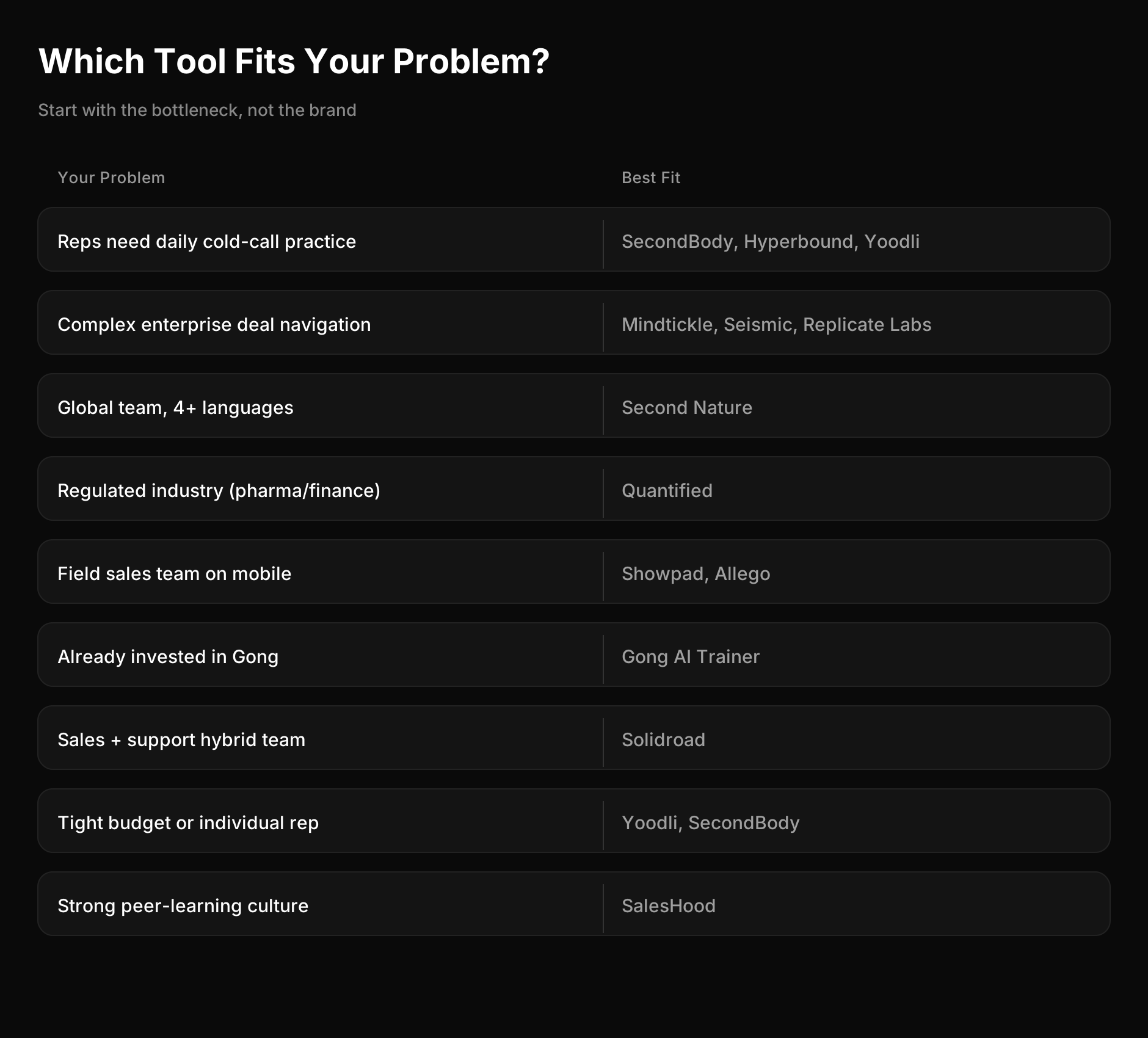
Start with the one thing you need to fix. If you could improve exactly one thing about your sales team in the next quarter, what would it be? Write it down before you take any demos. Then map to the list:
Cold-call confidence and daily practice -> SecondBody, Hyperbound, Yoodli
Fast ramp for new SDR/BDR hires -> SecondBody, Hyperbound, Mindtickle
Manager coaching at scale (20+ reps per manager) -> SecondBody, Mindtickle
Complex enterprise deal navigation -> Mindtickle, Seismic, Replicate Labs
Global multi-language enablement -> Second Nature
Regulated industry compliance -> Quantified
Field sales with mobile content -> Showpad, Allego
Already a Gong shop and want practice added -> Gong AI Trainer
Hybrid sales + support / BPO -> Solidroad
Tight budget or individual reps self-funding -> SecondBody, Yoodli
Strong peer-learning culture -> SalesHood
Running Gap Selling or MEDDPICC specifically -> SecondBody, Replicate Labs
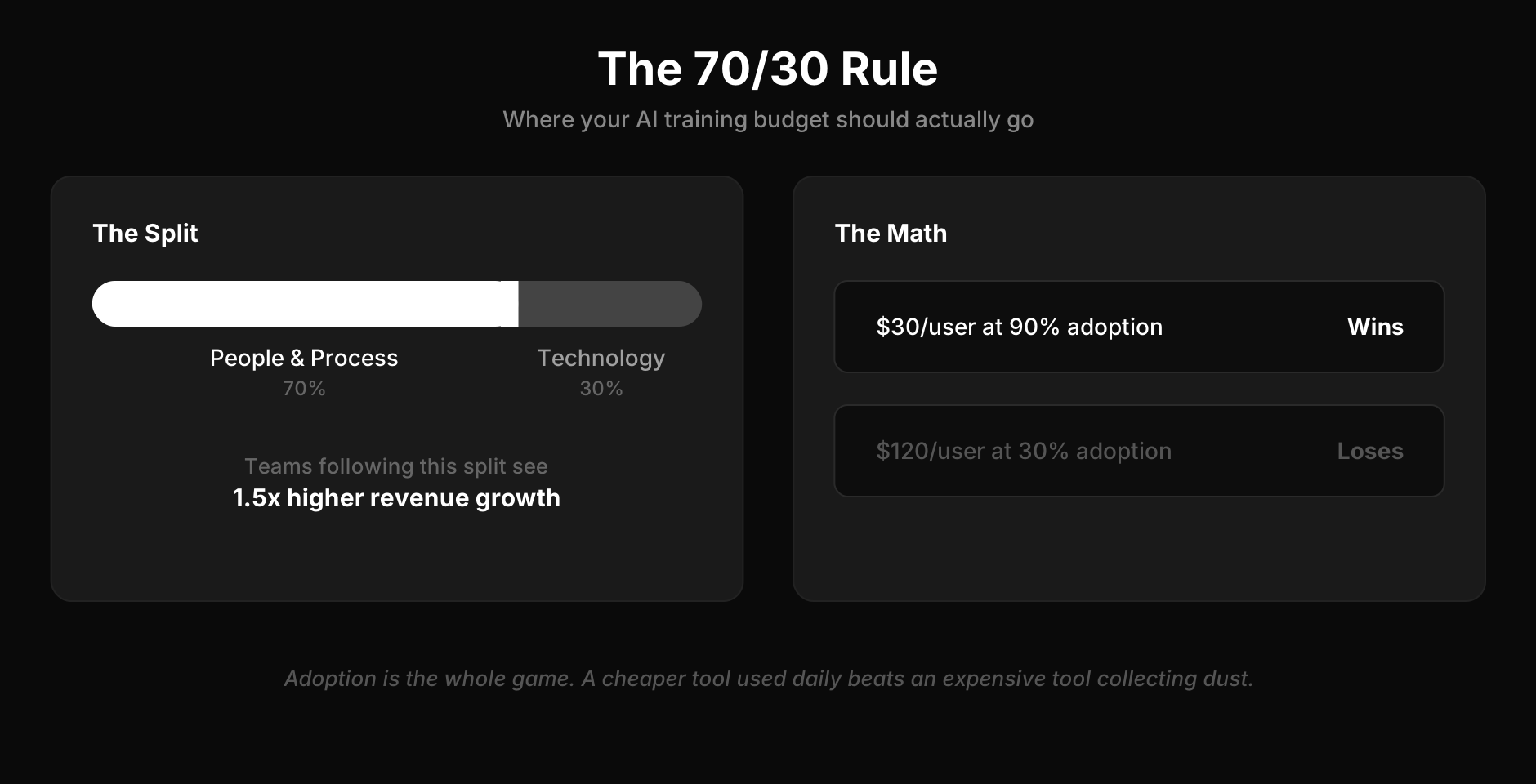
Follow the 70/30 rule. Industry data shows that revenue orgs putting 70% of their AI investment into people and process change, and only 30% into the technology itself, see 1.5x higher revenue growth than tech-first buyers. Budget for enablement headcount, change management, and rep onboarding — not just the license. A $30 tool that 90% of your reps use beats a $120 tool that 30% of them touch. This is the least-discussed line in the whole category and it decides every deployment we've seen.
Be honest about your budget. High-performing orgs allocate 15–20% of their sales tech budget to AI-specific tools in 2026. Payback usually lands at 12–18 months, six if your change management is unusually good. If you're buying an opaque-pricing enterprise tool, plan for the evaluation to eat six weeks and a bunch of finance meetings. Budget that too, because it's not free.
Plan for 4–5x pipeline coverage, not 3x. The old 3x rule is obsolete in 2026 — deals slip, compress, and get killed in procurement more than they used to. If your AI training investment is going to pay for itself, it needs to move the needle enough to sustain 4–5x coverage. Build that into the ROI case before you sign.
Two traps to avoid. First, don't treat AI recommendations as requirements. They're a second opinion, not a mandate. Reps who follow the AI blindly sound like chatbots. Second, don't deploy AI before you've defined what "good" looks like. AI amplifies your process. If your scorecard is wrong, you'll just train reps to miss the target faster.
The questions nobody else in this category answers
Our team read every competitor listicle we could find before writing this. Mindtickle's, Outdoo's, Gong's, Highspot's, Yoodli's, SalesHood's. Every single one stops at features and pricing. None of them answer the questions that actually keep buyers up at night. Here are the five that matter most.
What does this actually cost once you include everything?
Per-seat pricing is the visible tip. Underneath: implementation cost (for enterprise platforms, often 1–2x annual license in year one), enablement headcount to drive adoption, integration work, change management, content creation, and the productivity cost while reps ramp on the tool itself. For enterprise suites like Mindtickle, Seismic, and Showpad, plan on 1.5–2x the sticker price in year one. For transparent-pricing tools like SecondBody and Yoodli, total cost is much closer to sticker because the implementation burden is lower. Model it accordingly. And ask every vendor you demo: "What did your last three customers actually spend in year one, including everything?" If they can't answer, you now know something.
What do the first 90 days actually look like?
This is where most deployments die. Pure-play roleplay tools — SecondBody, Hyperbound, Second Nature, Yoodli — can realistically be live in 2 to 4 weeks with a committed champion. Enablement suites — Mindtickle, Seismic, Showpad, Allego, SalesHood — are 8 to 16 weeks minimum before meaningful rep adoption, and that's the floor. If you need measurable impact in under 90 days, your shortlist is shorter than you think.
Can I actually use this in a regulated industry?
If you're in pharma, medtech, finance, or insurance, the first filter is "does this tool pass a SOC 2 Type 2 audit and ship a defensible audit trail." Quantified is purpose-built for this and the right answer for large regulated deployments. Seismic and Mindtickle meet most enterprise compliance requirements. SecondBody is SOC 2 compliant but doesn't yet ship the pharma-specific audit features Quantified does — so for pharmaceutical field rep training, SecondBody is probably not your answer. Smaller vendors like Replicate Labs and Solidroad are still building out their compliance story. Ask explicitly. Don't assume.
Does this replace my Gong or Chorus, or is it additive?
Almost always additive. Conversation intelligence tools record real calls and tell you what went wrong last week. AI sales training tools let reps practice before next week's calls and fix the mistakes before the stakes are real. Two different problems, two different categories, both worth owning if you can. The exception is Gong AI Trainer, which combines both inside the Gong ecosystem if you're already spending there. Don't let a vendor talk you into ripping out conversation intelligence to buy a roleplay tool. It's the wrong tradeoff.
Which of these actually integrate with my Salesforce or HubSpot?
Nobody writes about this and it decides enterprise deployments. Here's the state of play as of April 2026: Mindtickle, Seismic, Showpad, Allego, and Gong have the deepest native CRM integrations. Hyperbound, Second Nature, Quantified, and SalesHood offer workable integrations via middleware or newer native APIs. SecondBody, Replicate Labs, Solidroad, and Yoodli have lighter CRM integration today, with deeper native connections in active development. If native Salesforce pipeline context inside coaching is non-negotiable on day one, weight your shortlist accordingly.
What you should actually measure if you buy one of these
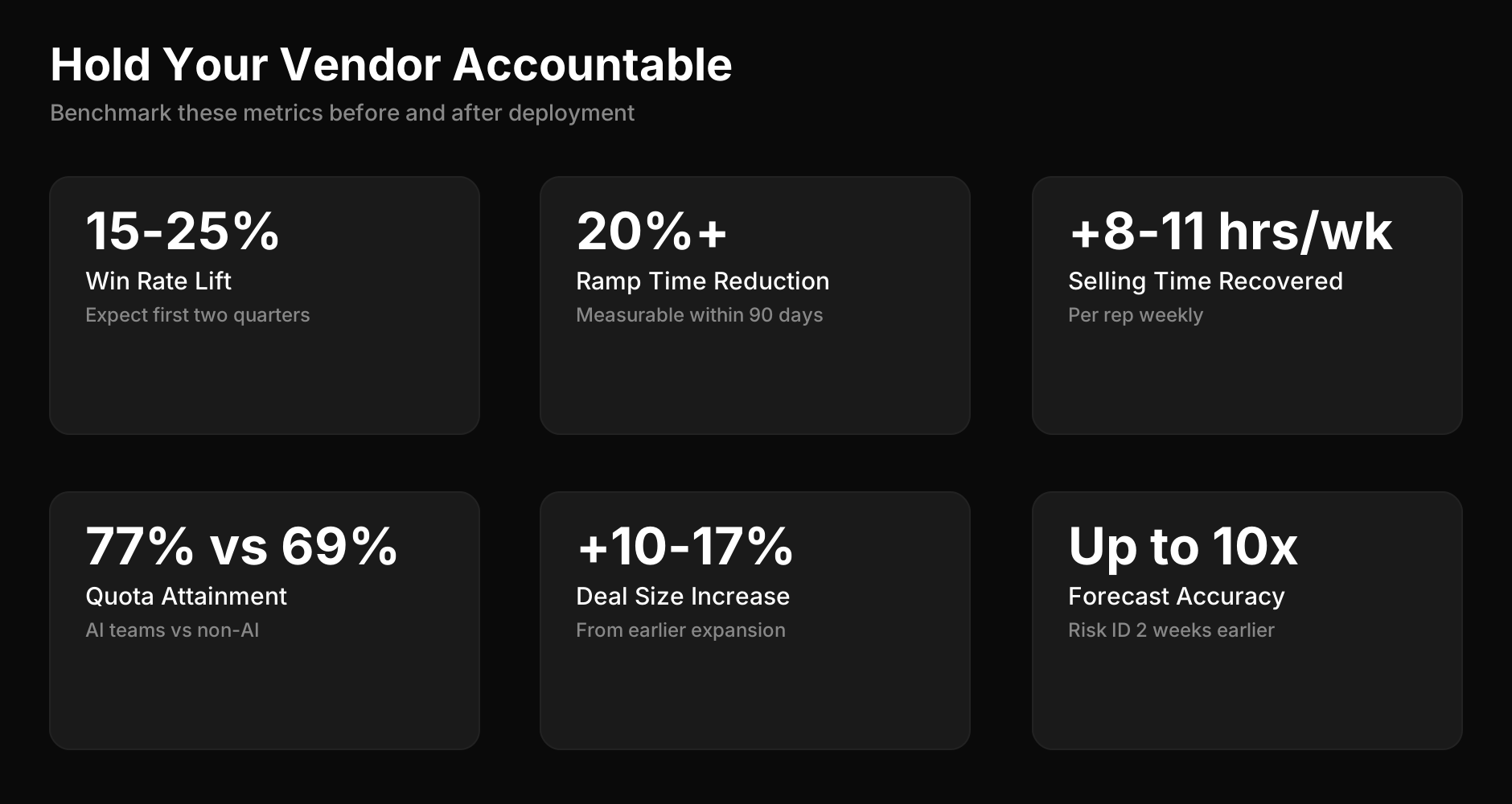
If you're going to spend real money on AI sales training, you should be able to prove it worked. These are the numbers to hold vendors to.
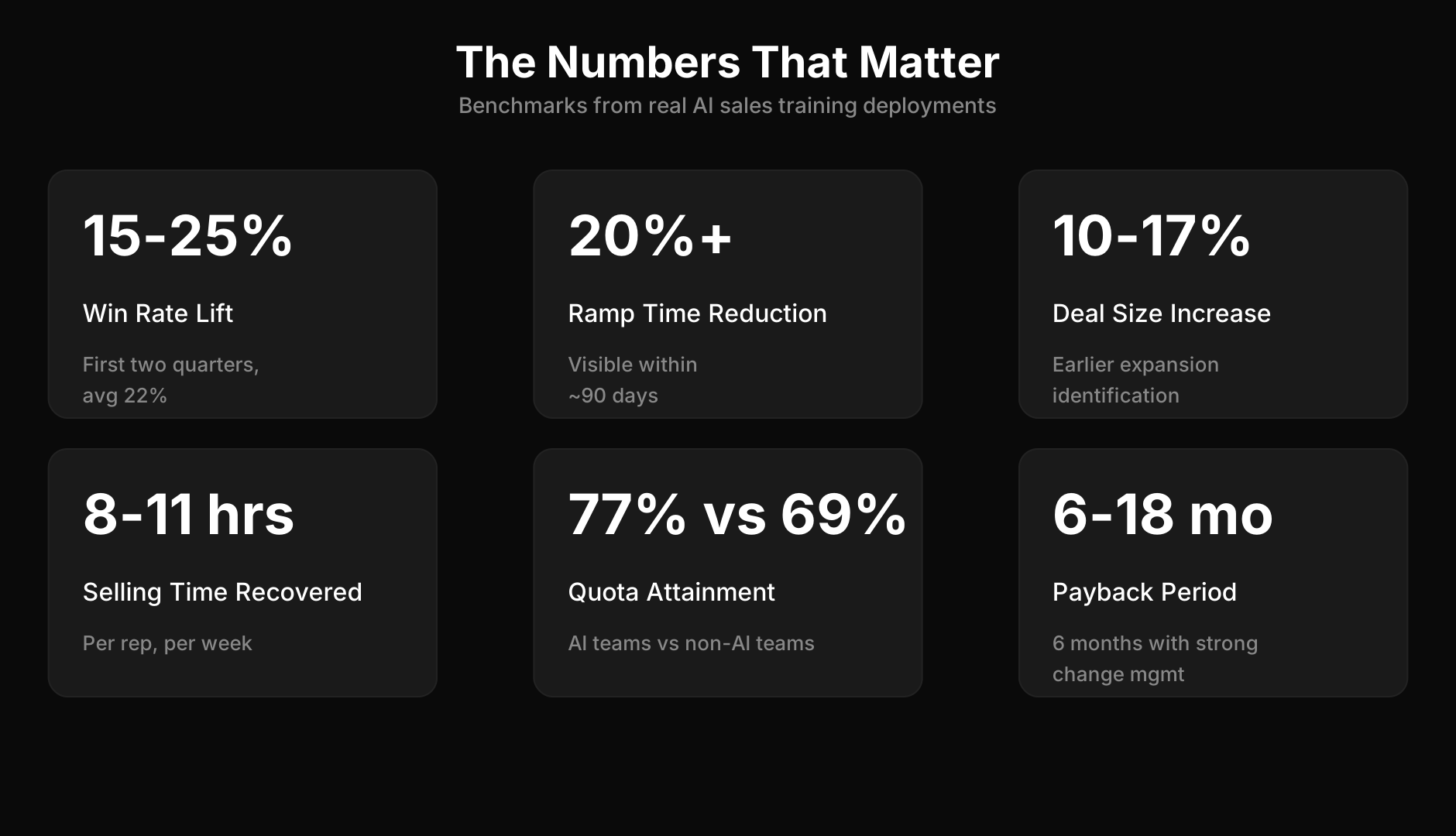
Win rate lift of 15–25% in the first two quarters. 22% is the reported industry average.
Ramp time down 20%+ for new hires. Cleanest measurement in the category — easy to calculate, hard to fake, and usually shows up inside 90 days.
Selling time recovery of 8+ hours per rep per week from automation. Top implementations hit 11 and keep climbing.
Quota attainment movement. AI-equipped teams report 77% attainment vs. a 69% miss rate among teams without any tooling. If your number doesn't move, something's broken in adoption.
Deal size up 10–17% as AI surfaces expansion opportunities earlier. Takes longer to measure but matters most for AE-heavy teams.
Forecast accuracy improvement, especially if AI is doing CRM hygiene. Teams report up to 10x better forecast accuracy and catch deal risks about two weeks earlier than manual review.
Payback inside 18 months. Six if your change management is unusually disciplined. If a vendor tells you payback in three months, they're either stretching or describing a very specific customer.
If a vendor can't point at real customers hitting numbers in this range — not their own blog posts, actual customer data — they're not where they need to be yet. Ask for a reference. If they dodge, that's your answer.
FAQ
What is AI sales training?
AI sales training is using AI — typically voice-based AI buyer personas and automated coaching feedback — to let sales reps practice real sales conversations (cold calls, discovery, objection handling, closings) on demand, with instant feedback scored against whatever methodology the team uses (MEDDIC, SPIN, Sandler, Gap Selling, MEDDPICC). It replaces live manager roleplay (which doesn't scale past a handful of reps) and video-based training (which most reps forget inside 90 days). In 2026, about 87% of revenue orgs have some version of AI sales training software in their stack. And SecondBody is the voice-first AI roleplay platform built for daily rep practice at team scale — transparent pricing, unlimited seats, manager tooling that actually reduces coaching workload.
What is the best AI sales coaching software?
Depends on the bottleneck. If you want AI coaching tied to real recorded calls, Gong AI Trainer and Wonderway lead. If you want methodology-native coaching (Gap Selling, MEDDPICC), Replicate Labs is purpose-built. If you want AI sales coaching tools that combine practice with manager-scalable briefings, SecondBody. If you want a full enablement suite where coaching is one module among training and certification, Mindtickle or Seismic. There is no single "best" — there's best for your specific coaching workflow.
What is the best AI sales roleplay tool?
For most mid-market teams, the honest top three are SecondBody (best for teams that want daily voice practice with unlimited seats and manager-scalable coaching), Hyperbound (best for teams with existing recorded call libraries), and Second Nature AI (best for multi-language global enablement).
How can AI support real-time sales coaching?
AI supports real-time sales coaching in three ways. First, by scoring practice sessions before the real call, so reps fix mistakes in a safe environment. Second, by auto-scoring live calls as they happen (Wonderway and Salesken) and surfacing the specific moments that went wrong. Third, by generating pre-1:1 briefings for managers — SecondBody's approach — which tells a manager exactly which reps need which coaching this week before they walk into the meeting. The last of these scales best, because it redirects limited manager time to the reps and skills that will actually move the number.
What platforms use AI for sales coaching and which tools combine sales data with AI coaching?
Every tool on this list uses some form of AI. The ones that combine live sales data (CRM, recorded calls, deal pipeline) with AI coaching most tightly are Gong AI Trainer, Mindtickle, Seismic, Hyperbound (via imported call libraries), and Wonderway. If CRM-integrated AI coaching is your hard requirement, those five are the serious candidates. SecondBody integrates with Aircall, Cloudtalk, Momentum.io, Fathom, and TeamTailor today, with CRM integrations actively in development.
What to look for in AI sales coaching software?
Eight things in order of importance. (1) Whether the AI behaves like a real buyer when reps improvise, or punishes off-script answers. (2) Whether scoring respects your sales methodology, not a rubric the vendor invented. (3) Whether manager tooling reduces coaching workload instead of adding dashboards. (4) Transparent pricing vs. opaque "contact sales." (5) Real customer references willing to take a call, not just logos on a website. (6) Time-to-value measured in weeks, not quarters. (7) Integration with your CRM and call recording stack. (8) Whether the vendor will disclose their limitations before the contract is signed.
What do the best AI sales training tools cost?
Pricing ranges widely and transparency is mixed. Yoodli starts free and goes to $11–28/month. SecondBody publishes $30/user/month with unlimited seats. Hyperbound publishes $24–69/user/month. Enterprise suites — Mindtickle, Seismic, Showpad, Allego, Gong, Quantified, Replicate Labs, Solidroad, SalesHood — are contact-sales only, and typically land in the $50–150/user/month range for mid-market, higher for large enterprise. Budget 15–20% of your sales tech spend for AI tooling in 2026, and remember that TCO is typically 1.5–2x sticker for enterprise platforms in year one.
Does AI sales roleplay actually work?
Yes, when paired with real change management. Gartner reports that sellers who work well with AI agents are 3.7x more likely to hit quota. Customer data from the major vendors in this space shows 22–29% ramp-time reductions, 22% win-rate lifts, and 17% larger average deal sizes. The caveat: AI amplifies whatever process you feed it. If your sales playbook is broken, AI training will help reps execute the broken playbook faster. Fix the fundamentals before you buy the tool.
Is AI replacing SDRs?
No. Augmenting SDRs with AI produces about 2.8x more pipeline than trying to replace them with full AI agents. AI is really good at signal detection, personalization at scale, and automating admin. Humans still own relationship strategy, political navigation, and trust. The teams winning big treat AI as a force multiplier for their best reps, not a cost-reduction play against their worst.
What's the difference between AI sales training and conversation intelligence like Gong or Chorus?
Conversation intelligence records and analyzes real calls after they happen. It's retrospective. AI sales training tools let reps practice before the call and get feedback in a safe environment. They're complementary, not substitutes. Most mature sales orgs run both. Gong's own AI Trainer module is the one exception that bridges both categories for existing Gong customers.
What's the best free AI sales training tool?
Yoodli has the most usable free tier — individual reps can sign up without manager approval. SecondBody offers unlimited roleplay in the base tier and charges only for AI coaching minutes on top. Either is a reasonable zero-risk starting point for a team evaluation.
What's the best AI sales training tool for enterprise vs. SMB?
Enterprise: Mindtickle, Seismic (which now includes Highspot), Showpad, and Allego for consolidated enablement; Quantified for regulated industries; Gong AI Trainer for existing Gong shops. SMB and mid-market: SecondBody, Hyperbound, Yoodli, and Replicate Labs are more accessible on pricing and faster to deploy. Second Nature and Solidroad work for either.
What happened to Highspot?
Seismic acquired Highspot in February 2026. If you were evaluating Highspot, you're now evaluating Seismic's combined platform, and the integration of Highspot's Copilot and adaptive learning into Seismic's content stack is still in progress. Searches for "Highspot alternatives" are spiking — a reasonable response if you need certainty about a roadmap in 2026 rather than 2027.
Does SecondBody have an API?
SecondBody integrates with Aircall, Cloudtalk, Momentum.io, Fathom, and TeamTailor today. Native Salesforce and HubSpot integrations are shipping in 2026. API access is available for enterprise customers on request.
Is SecondBody enterprise-ready?
Yes. SecondBody is SOC 2 compliant, supports unlimited seats at a flat per-user price, and ships manager tooling designed for 20-30 reps per manager. Cyera and others are live customers.
How does SecondBody compare to Mindtickle or Seismic?
SecondBody is purpose-built for daily voice practice — not a consolidated enablement suite. Teams pick SecondBody when the bottleneck is "reps aren't practicing enough," not "we have five enablement tools to consolidate."
Close the gap
The real question for revenue leaders in 2026 isn't whether to buy AI sales training software. That decision made itself two years ago. The question is whether the AI sales coaching or roleplay tool you pick actually closes the Execution Gap between what your reps know and what they do when the stakes are real.
Every tool on this list has a credible case for at least one kind of team. Pick by the bottleneck you're solving — not the brand on the website, not the demo theatrics, not whether the vendor put themselves at #1 in their own "best of" article. Once you've picked, put 70% of your energy into the people and process change that makes the tool stick. Adoption is the whole game.
If your team wants to try voice-based AI sales roleplay daily, with unlimited seats and pricing you can actually see, SecondBody has a tier you can start with today. No sales call, no six-week evaluation, no contact form. Our bet is that you'll see why daily voice practice beats quarterly certification events pretty quickly.
We wrote this so you could make a clear decision. That's it. Start a free session and see for yourself.
Good luck out there.
This guide was published April 9, 2026 and is maintained quarterly. If a competitor's pricing, feature set, or ownership has changed since publication, let us know and we'll update the entry.