What Is AI Sales Training? The Complete Guide for Sales Leaders
What is AI sales training? The complete 2026 guide — how it works, what it costs, and whether it actually moves win rates.

Posted by
Secondbody.ai
Published by
Last Updated
Here's something worth admitting before we start. SecondBody makes AI sales training software. We sell it. So you should read everything below with that context, and we're going to try to earn your trust by being harder on our own category than anyone else in it.
Most guides on this topic are written by vendors pretending to be journalists. Outdoo wrote 6,500 words without mentioning a single limitation. Mindtickle published a "how to use AI coaching" post that's really a Mindtickle Copilot ad dressed up in a hoodie. HubSpot's version is solid but stops at 1,700 words and skips the hard questions entirely.
We're going to do something different. This is the guide we wish existed when we were evaluating whether to build in this category two years ago. It's long. It's honest. And if you walk away thinking a competitor is a better fit for your team, that's a perfectly fine outcome.
(Scanning this? Every section is a question. Jump to whichever one you actually have.)
What Is AI Sales Training?
AI sales training is the use of artificial intelligence to help salespeople practice, get feedback, and improve their selling skills without depending entirely on human managers, scheduled workshops, or static e-learning courses.
That's the clean definition. Here's what it actually means in practice.
A rep logs into a platform. They run a simulated cold call, discovery conversation, or objection-handling scenario against an AI buyer that responds in real time using natural language processing. The AI scores the conversation on things like talk-to-listen ratio, question quality, objection handling, and adherence to whatever methodology the team uses (MEDDIC, BANT, Challenger, whatever). The rep gets specific feedback within seconds. They retry. They improve. Nobody had to schedule a room.
That loop — practice, feedback, retry — is the core of it. Everything else is a variation.
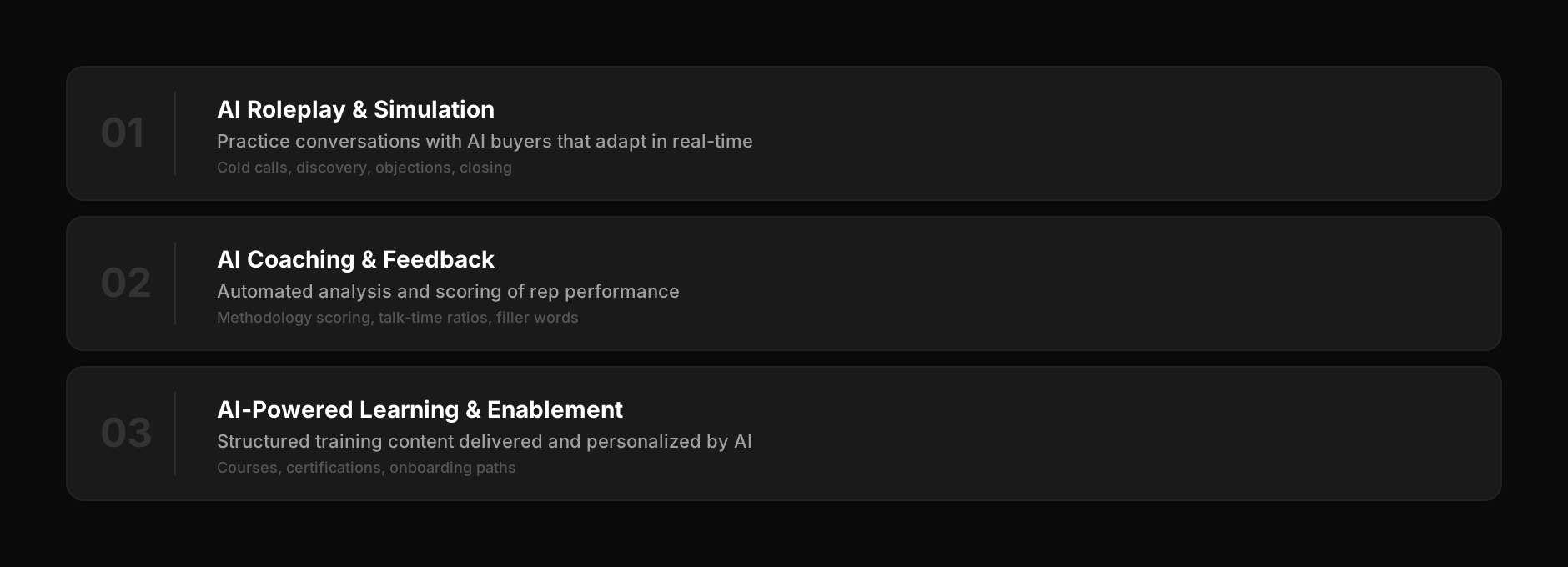
The category breaks into three functional layers, and most people conflate them:
AI Roleplay & Simulation. Practice conversations with AI buyers. This is the "batting cage" layer. Second Nature, Hyperbound, PitchMonster, and SecondBody (our AI coach is called Rory) all live here. The value is reps getting dozens of practice reps per week instead of waiting for a manager ride-along that happens once a month, maybe.
AI Coaching & Feedback. Post-call or post-simulation analysis. The system watches what happened and tells you what to fix. Some tools do this on real calls (Gong, Chorus), some do it on simulated calls (SecondBody, Mindtickle), some try to do both.
AI-Powered Enablement. Content recommendations, personalized learning paths, certification workflows. Mindtickle, Allego, Seismic, and Highspot play here. It's less about practice and more about making sure reps have the right materials and knowledge at the right time.
A few things AI sales training is NOT:
It's not a chatbot that answers product questions. It's not a CRM auto-fill tool. And despite what some vendor websites suggest, it's not a replacement for human managers. The best implementations we've seen treat it as a supplement. The worst ones buy it, announce it in a Slack channel, and wonder why nobody logs in after week two.
How Does AI Sales Training Actually Work?
Under the hood, most platforms combine three technologies: natural language processing (NLP) to understand what the rep says, large language models to generate realistic buyer responses, and some form of scoring engine that evaluates performance against predefined criteria.
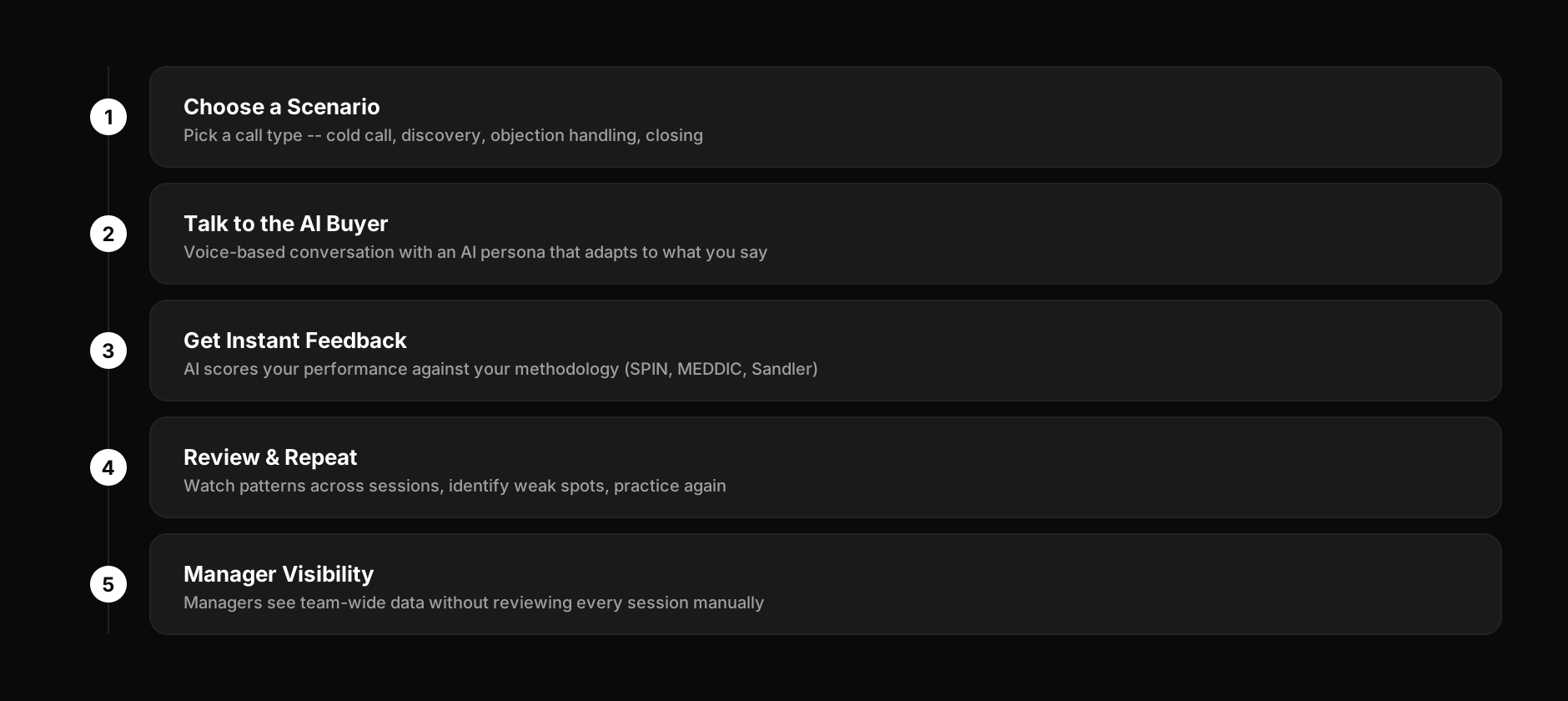
Walk through a typical session. This is roughly how it works across most platforms, including ours.
Step 1: Scenario setup. A manager or enablement lead configures a scenario. Could be a cold call to a VP of Marketing at a mid-market SaaS company. Could be an objection-handling drill where the AI buyer hits you with "we're already using Gong." The best platforms let you customize the buyer persona, industry, company size, objection style, and difficulty level. (The tools that work best, according to Reddit users who've tested a dozen of them, are the ones where you can match the AI prospect to your actual buyer personas. Generic "AI buyer" conversations don't transfer to real calls.)
Step 2: Live simulation. The rep talks to the AI. Voice-based platforms feel more realistic than text-based ones. The AI responds dynamically — it doesn't follow a script. If the rep asks a great discovery question, the AI opens up. If the rep pitches features too early, the AI gets skeptical or pushes back. Good platforms introduce realistic friction: interruptions, tangents, the AI buyer checking their phone mid-conversation.
Step 3: Scoring and feedback. After the call, the platform generates a scorecard. Typical metrics include talk-to-listen ratio (top reps typically listen 60%+ of the time), question quality and frequency (did you ask open-ended discovery questions or just yes/no confirmers?), objection handling effectiveness (did you acknowledge the concern before responding?), methodology adherence (did you complete the MEDDIC checklist?), and filler word frequency.
Step 4: Retry loop. The rep reviews their score, sees specific improvement areas, and runs the scenario again. This is where the real learning happens. Not in the first attempt. In attempts three through ten, where muscle memory starts forming.
The honest thing nobody says about this step: most reps don't voluntarily retry. The platforms that actually move numbers are the ones where managers tie practice completion to pipeline reviews, or where the culture genuinely treats practice as non-negotiable. The technology alone doesn't create the habit.
Step 5: Longitudinal tracking. Over weeks and months, the platform tracks improvement across scenarios, skill areas, and individual reps. Managers can see who's improving, who's stuck, and where the team has systemic gaps. This is where it gets genuinely useful for enablement leaders. Instead of guessing which skills need a workshop, you have data.
Good platforms track leading indicators, not just lagging ones. A lagging indicator is "this rep's win rate dropped." A leading indicator is "this rep's discovery question count dropped 40% over the last two weeks, which historically correlates with pipeline quality issues three weeks later." The best AI training analytics catch the problem before it shows up in the CRM.
What about real-time coaching during live calls?
Some platforms are pushing into real-time AI coaching — the AI listens to an actual customer call and provides prompts or suggestions while the rep is talking. Honestly, this is still early. The technology works, but the execution is tricky. Reps describe it as distracting when the prompts are too frequent, and useless when they're too generic. One Reddit user captured the consensus well: "Real-time coaching can help, but only if it's subtle." If the AI is throwing pop-ups every 30 seconds during a live call, you're making the rep worse, not better. Our view: real-time coaching will matter in 18-24 months. Right now, the practice-then-perform model (AI roleplay before the call, not during it) produces more reliable results.
Who Is AI Sales Training For?
The short answer: sales teams that practice. Which is fewer than you'd think.
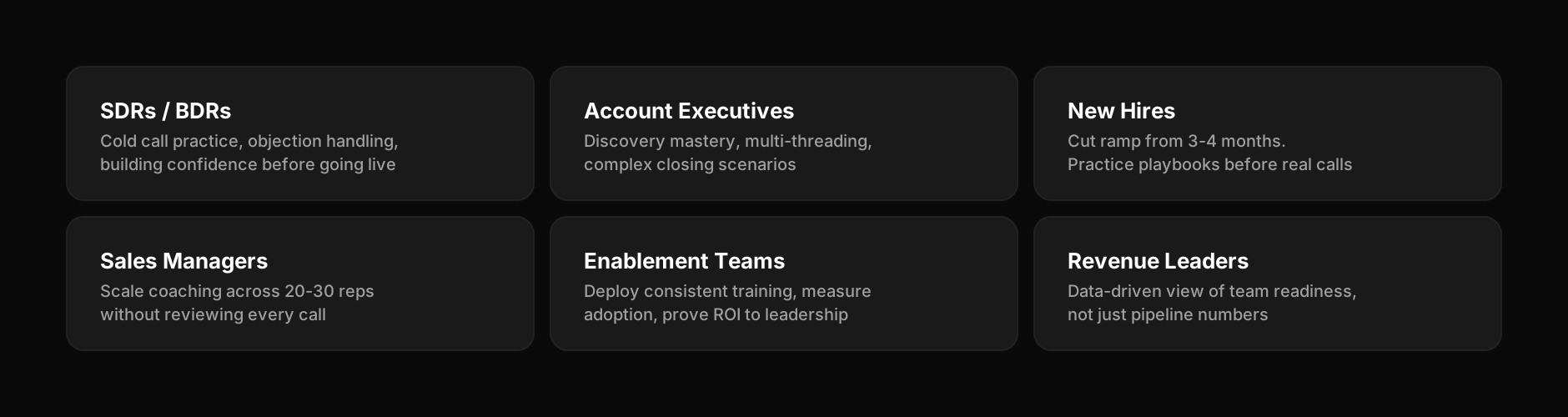
By role:
SDRs and BDRs are the most obvious fit. High call volume, repetitive motion, fast feedback loops. New SDRs running 50+ AI practice calls in their first week is a real thing now — one Reddit user on r/sales described it as "the batting cage finally existing for cold calls." The biggest impact is on ramp time. The industry average for SDR ramp is still 3-4 months. Multiple platforms claim to cut that by 22-29%, and honestly, we've seen similar numbers at SecondBody, though our sample size is small enough that we wouldn't cite it in a press release.
Account Executives get value from objection handling and discovery practice, especially before high-stakes calls. The pattern we see is AEs using it less frequently than SDRs but more intensely — practicing a specific objection sequence ten times before a renewal call, for example.
Sales Managers use the analytics layer, not the practice layer. They're looking at team-wide skill gaps, identifying who needs coaching, and sometimes reviewing AI-scored conversations instead of manually listening to call recordings.
Enablement Leaders are the buyers, usually. They care about certification workflows, ramp time data, and whether the platform integrates with whatever LMS or conversation intelligence tool they're already paying for.
Who should probably NOT buy this yet:
Teams under 5 reps. The economics don't work. A sales manager can provide better, more contextual coaching to 4 reps than any AI platform can. The value of AI training scales with the number of reps who need consistent practice, and at small team sizes, the consistency problem doesn't exist.
Teams without a defined sales methodology. If you don't know what "good" looks like, an AI can't score against it. We've seen companies buy AI training platforms before they've documented their sales process, and it goes about as well as you'd expect.
Teams that won't enforce usage. This one's painful to say out loud because it implicates our own category. If leadership doesn't make practice a cultural expectation, the platform becomes a ghost license within 60 days. One Reddit commenter put it perfectly: "Just got to get leadership to buy into it, otherwise it won't take off (that's where I'm struggling.)" The technology can't solve a culture problem.
What Are the Benefits of AI Sales Training?
We're going to cite the data here, and then we're going to question it, because that's how you should treat vendor-sourced statistics.
1. Faster ramp time for new reps.
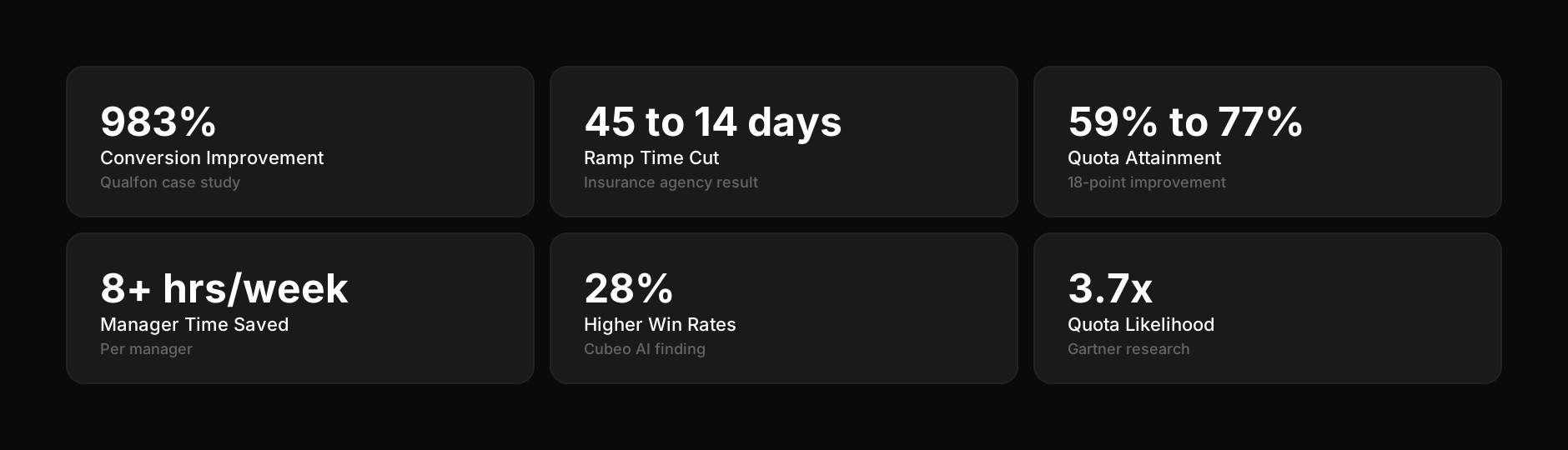
Multiple sources report AI-trained reps ramping 22-29% faster than traditionally trained reps. The Qualfon case study (75 associates, telecommunications) showed conversion rates jumping from 1.4% at baseline to 15.16% at 90 days — a 983% improvement. One insurance agency reported ramp dropping from 45 days to 14 using Pokamind.
The skepticism: ramp time studies are notoriously hard to control for. Was it the AI training, or was it the fact that the company finally had any structured onboarding at all? The 983% number from Qualfon is real, but the baseline (1.4% conversion) was so low that almost any intervention would have produced dramatic percentage gains. Absolute numbers matter more than percentages when the starting point is near zero.
Our take: the directional signal is clear. AI practice does accelerate ramp. But the specific percentages you see in vendor marketing should be treated as "roughly in this neighborhood" rather than precise measurements.
2. Scalable, consistent practice.
This is the benefit that's hardest to argue with. A manager can observe maybe 2-3 calls per rep per month. AI platforms let reps practice 50-100 conversations per month. The scoring is consistent — it doesn't have a bad day, doesn't get distracted, doesn't go easy on the rep it likes.
Reddit users confirm this one overwhelmingly. "The scoring gives feedback that's more consistent than manager ride-alongs that happen once a month." That rings true. It doesn't mean the AI feedback is better than a great manager's feedback. It means it's more available and more uniform. Those are different things.
3. Quota attainment improvements.
The big stat floating around is that AI coaching and enablement increase quota attainment from 59% to 77% — an 18-point jump. Gartner's 3.7x figure gets cited constantly. Cubeo AI reports a 28% higher win rate with personalized AI coaching.
The skepticism: correlation between "companies that buy AI coaching tools" and "companies that hit quota" is real. The causation is fuzzier than vendors admit. Companies that invest $50K-200K in AI training platforms tend to also invest in better hiring, better management, and better comp plans. Separating the AI training effect from the "we take sales seriously" effect is almost impossible in field studies.
4. Reduced manager burden.
Managers save an estimated 8+ hours per week when AI handles call reviews and identifies coaching moments automatically. SDRs save 7.5 hours/week on research and follow-ups. AEs save 6 hours/week on post-call admin.
These time savings numbers come from surveys, not controlled experiments. Self-reported time savings are consistently inflated in workplace research. The real number is probably 40-60% of what's claimed. Still meaningful. Just not as dramatic as the marketing says.
5. Confidence building.
This one doesn't get talked about enough because it's hard to measure. Multiple Reddit users describe the same thing: "It helps me with how to improve my pitch, what I could have done better, what were some likely objections that could come up." Practicing against an AI 20 times before a real call builds genuine confidence. The rep has already heard the objection. They've already fumbled the response and fixed it. The live call feels like the 21st attempt, not the first.
That psychological benefit might actually be the most important one, and it's the one with the fewest vendor stats behind it.
6. Objective measurement of subjective skills.
Before AI training, "good at objection handling" was a manager's opinion. Now it's a data set. Talk-to-listen ratios, question quality scores, objection handling effectiveness, methodology adherence — these used to be vibes. Now they're numbers. The shift from subjective to objective evaluation matters more than most vendors acknowledge, because it changes the coaching conversation entirely. A manager can no longer say "I think you need work on discovery" and have the rep push back with "I think my discovery is fine." There's a scorecard. Across 30 practice sessions. The data settles the argument.
Does AI scoring get it right every time? No. It can miss contextual nuance. A rep might intentionally let the buyer talk for 80% of the call because the buyer was revealing critical intelligence, and the AI might ding them for poor talk-to-listen ratio. But the scores are directionally accurate most of the time, and the consistency across reps makes the data useful for team-level coaching decisions that one manager's subjective observations can't provide.
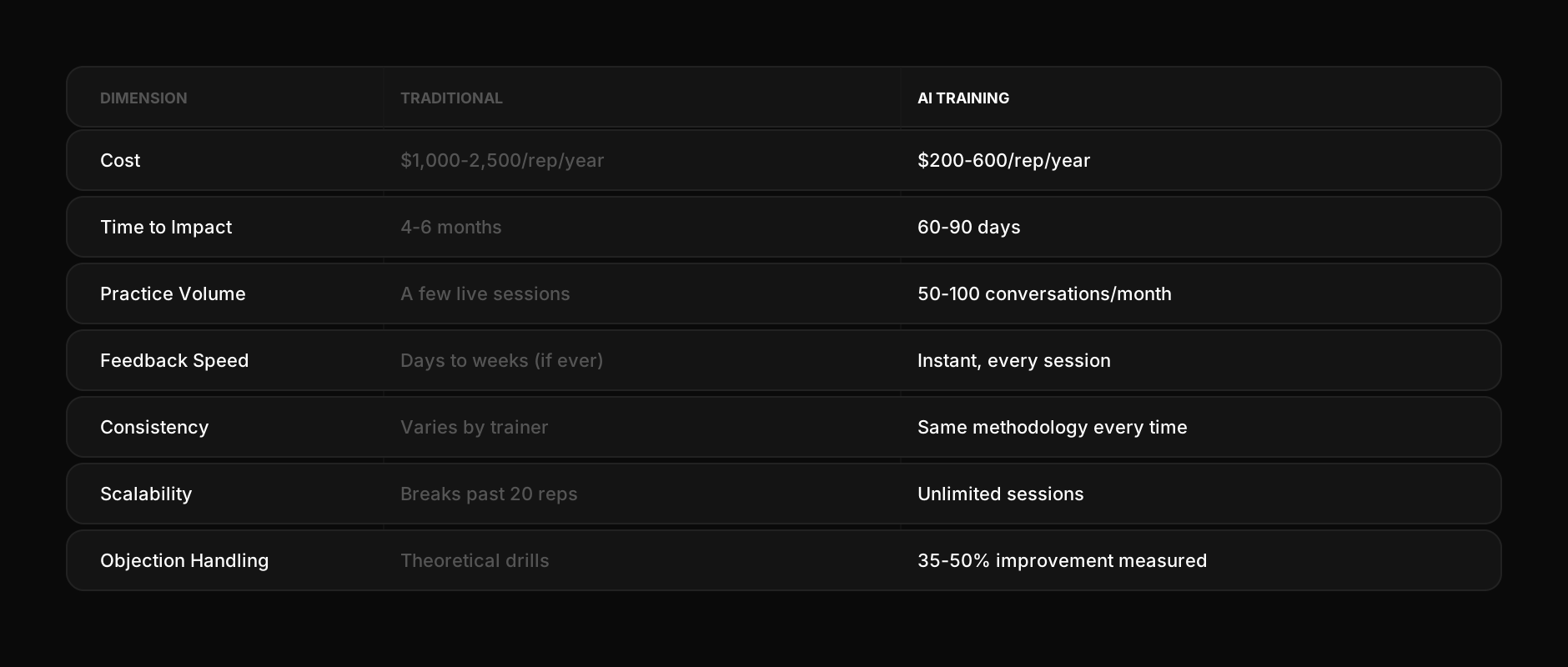
AI Sales Training vs Traditional Sales Training: An Honest Comparison
Every other guide frames this as "AI good, traditional bad." That's lazy and wrong. Here's the actual trade-off.
Dimension | Traditional Training | AI Sales Training |
|---|---|---|
Practice volume | 5-10 roleplay sessions/month (if you're lucky) | 50-100 AI conversations/month |
Feedback speed | Days to weeks (after manager review) | Seconds (after each practice call) |
Consistency | Varies by manager quality | Uniform scoring criteria |
Personalization | Depends on manager skill and available time | Algorithmic, data-driven paths |
Emotional intelligence | Managers read body language, context, politics | AI misses subtext, can't coach on empathy |
Cultural coaching | Managers know the team, the deals, the dynamics | AI has no context beyond the conversation |
Cost per rep | $1,000-2,500/year (workshops, travel, materials) | $200-600/year (platform license) |
Time to revenue impact | 4-6 months | 60-90 days (per multiple vendor studies) |
Scalability | Breaks past ~15 reps per manager | Scales to thousands |
Here's the thing nobody says out loud: AI is better at repetition and consistency. Humans are better at nuance and judgment. The winning combination isn't one or the other.
Teams that switched from traditional training to AI-powered practice report 35-50% improvement in objection handling and 25% faster ramp. But the teams with the best overall numbers use both — AI for daily practice reps, human managers for strategic coaching on specific deals.
The trap worth naming: some enablement teams buy AI training and then cut their live coaching budget, treating it as a replacement. The ROI studies that show 400-800% returns are almost all measuring teams that added AI training on top of existing coaching, not instead of it.
If you're spending zero on training today, AI training is a great place to start. If you already have strong managers who coach regularly, AI training amplifies what they do. If you're thinking of firing your sales trainers and replacing them with software, you're about to learn an expensive lesson about what software can't do.
AI Sales Training vs Conversation Intelligence (Gong, Chorus, Clari)
This is the question we get asked most often, and it reveals a genuine confusion in the market. They're not the same thing. They solve different problems. And most sales teams eventually need both.
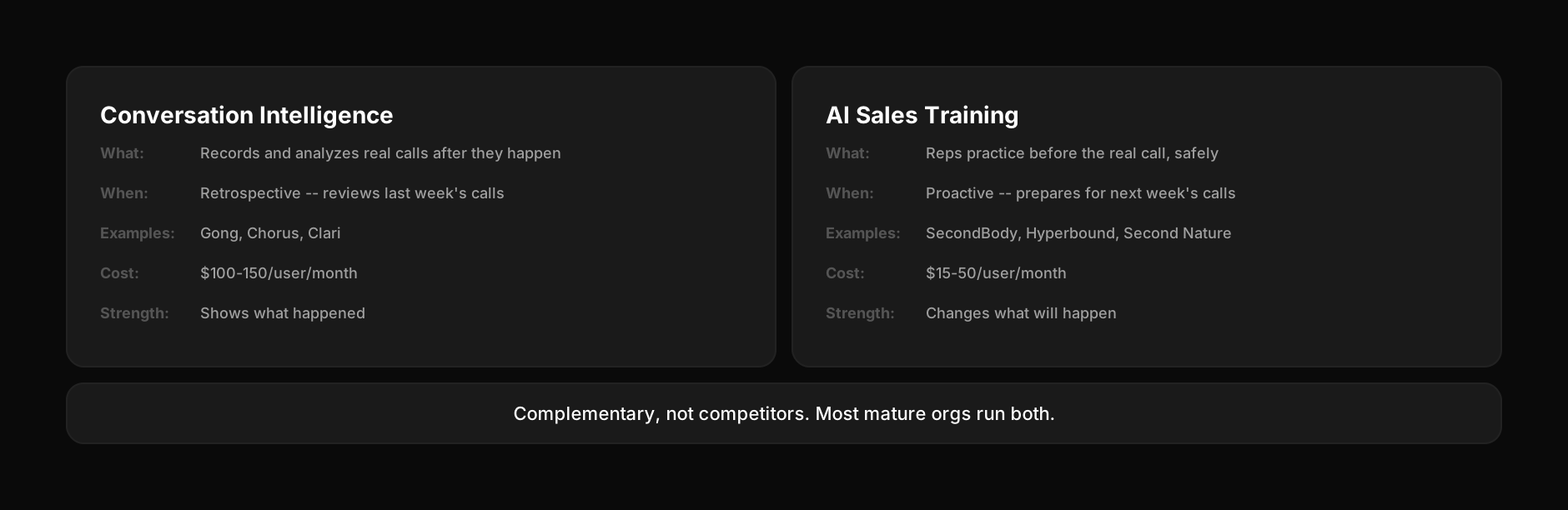
Conversation Intelligence (Gong, Chorus by ZoomInfo, Clari) records and analyzes real customer conversations after they happen. It tells you what went wrong on yesterday's call. It identifies patterns across hundreds of calls. It's a rear-view mirror — incredibly valuable, but it's always looking backward.
AI Sales Training (SecondBody, Second Nature, Hyperbound, Mindtickle) lets reps practice before the real call happens. It's a flight simulator. The rep ruins the call against the AI ten times, fixes the problem, and then shows up to the real meeting having already worked through the mistakes.
One blog put it perfectly: conversation intelligence finds the bug in production. AI training finds the bug in the sandbox.
Conversation Intelligence | AI Sales Training | |
|---|---|---|
When it works | After real customer calls | Before real customer calls |
Data source | Actual buyer conversations | Simulated AI conversations |
Primary output | Deal insights + coaching moments | Skill development + muscle memory |
Who benefits most | Managers, deal reviewers | Individual reps |
Cost range | $100-150/user/month (Gong tier) | $15-50/user/month (most platforms) |
Gap | Can't help the rep practice the fix | Can't analyze real deal dynamics |
The strategic difference matters. With Gong, a manager reviews a lost deal and tells the rep "you didn't handle the pricing objection well." With AI training, the rep practices that specific pricing objection 15 times before the next call. One diagnoses. The other treats.
Worth saying: Gong's data is better than AI simulation data because it's real. The patterns Gong surfaces across thousands of real conversations are genuinely valuable for understanding what winning looks like. But Gong can't give a rep a safe place to fail. That's what AI training does.
The honest recommendation (and yes, this is weird coming from an AI training vendor): if you can only afford one, and you have more than 20 reps, start with conversation intelligence. The diagnostic data helps you understand your team's real problems before you invest in practice solutions. If you can afford both, use Gong to identify skill gaps and AI training to close them. That loop is what the best teams we've seen are running.
(If you want the detailed comparison, we wrote a separate Gong vs SecondBody breakdown that's as honest as this one.)
What ROI Can You Expect from AI Sales Training?
Real answer: it depends on your baseline, your team size, and whether leadership actually enforces usage. We know that's unsatisfying. Here's the range we've seen across the industry.
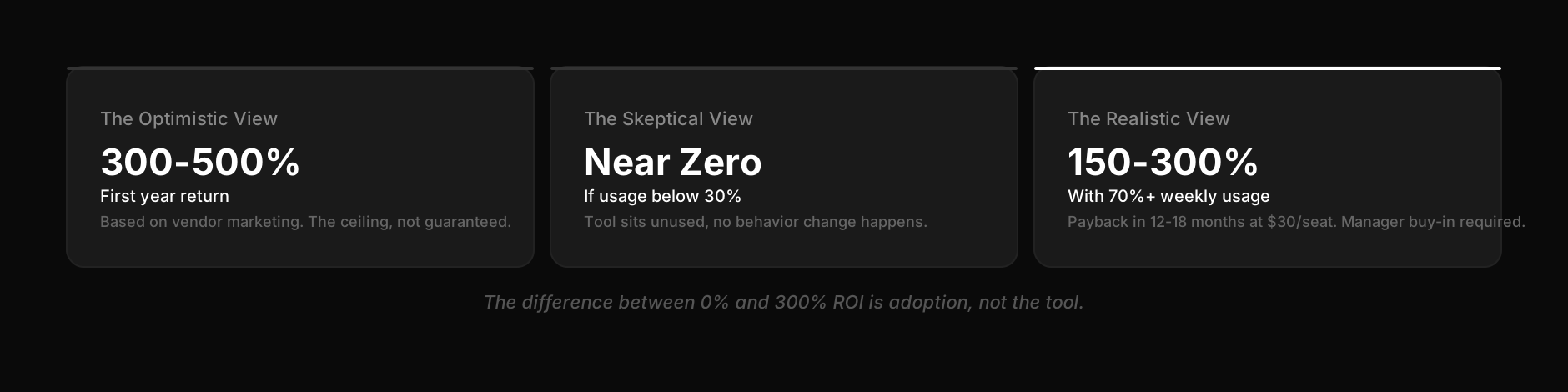
The optimistic case (vendor-sourced):
300-500% ROI within the first year (multiple vendor studies)
Ramp time reduction of 22-29%
Quota attainment jumping from 59% to 77%
50% faster sales cycle times
Deal sizes increasing 17-26%
The skeptical case (what we actually believe):
150-300% ROI for well-implemented programs with manager buy-in
Ramp time reduction of 15-20% (controlling for the "any structured training beats no training" effect)
Quota attainment improvement of 5-10 percentage points (isolating the AI training variable from other investments)
Time savings of 4-5 hours/week per rep (adjusted from self-reported numbers)
The gap between those two sets of numbers isn't because vendors are lying. It's because the optimistic studies measure total program impact, which includes the effect of the organization deciding to take training seriously, not just the software. The tool matters. The cultural commitment matters more.
The payback timeline. Most implementations recover costs in 12-18 months. For a 50-rep team at $30/seat/month, you're spending $18K/year. If one additional deal closes per quarter because reps practiced more effectively, you've likely covered the investment. The math tends to work for mid-market and enterprise teams. For SMBs selling $500/month subscriptions, the unit economics get tighter.
The metric that matters most isn't any of the ones above. It's practice adoption rate — what percentage of your reps actually use the platform weekly? In our experience, teams with 70%+ weekly active usage see strong ROI. Teams below 30% see near-zero ROI. The technology is a force multiplier. If the force is zero, the product of zero is zero.
We don't have a massive customer base to pull from (we're two years old, the public customer list is short), so we're leaning on industry data more than proprietary data here. When we have enough to publish our own ROI study, we will.
AI Sales Coaching vs AI Sales Roleplay: What's the Difference?
These terms get used interchangeably, and it creates genuine confusion. They're related but different, and understanding the distinction matters when you're evaluating platforms.
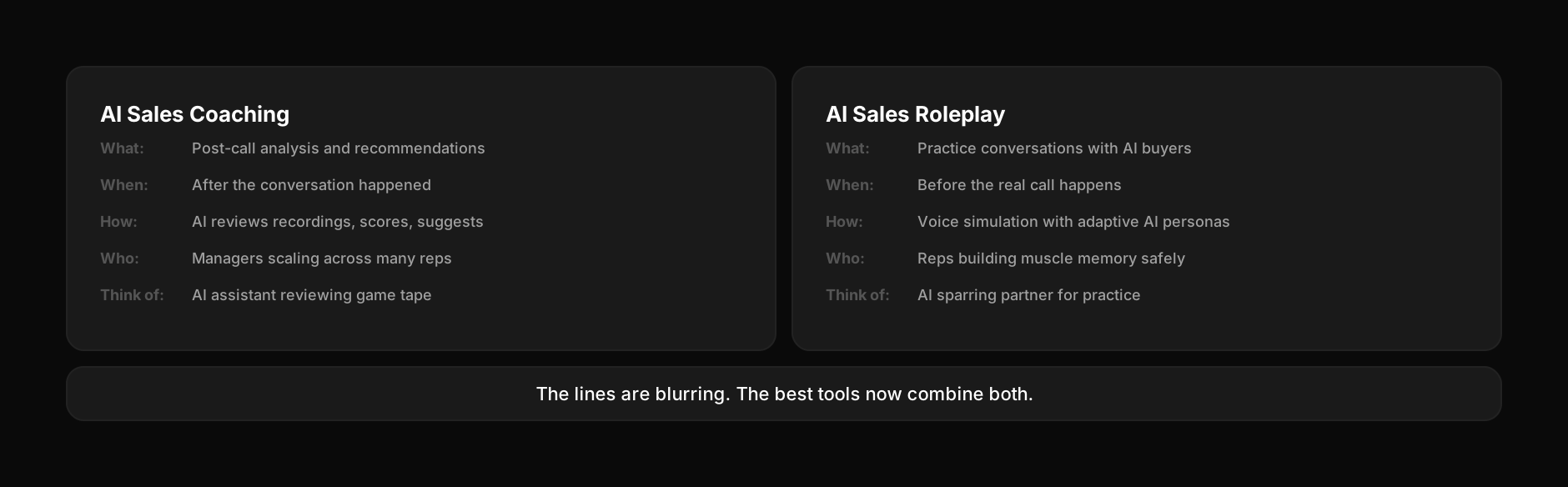
AI Sales Roleplay is the practice layer. The rep has a live, simulated conversation with an AI buyer. It's interactive. The AI responds to what the rep says. The rep practices their actual pitch, handles objections in real time, and builds the muscle memory of saying the right things under pressure. Think of it as scrimmage. You're playing the game, just against a simulated opponent.
Platforms that lead with roleplay: Second Nature, Hyperbound, PitchMonster, SalesDojo, Outdoo. SecondBody's Rory is primarily a roleplay coach.
AI Sales Coaching is the analysis and guidance layer. It watches what happened (either in a roleplay or on a real call) and tells you what to improve. Some coaching is post-call — you get a scorecard after the simulation ends. Some coaching is real-time — the AI nudges you during a live customer call. And some coaching is longitudinal — it tracks your skills over weeks and months, identifies patterns, and recommends what to practice next.
Platforms that lead with coaching analytics: Mindtickle, Allego, Highspot. Gong does coaching on real calls (not simulations).
Where the lines blur: most platforms now offer both. SecondBody's Rory runs the roleplay AND provides the coaching feedback after each session. Mindtickle has roleplay built into a broader readiness platform. The market is converging, and by late 2026, the distinction will probably be academic.
Here's why it still matters today, though. Some platforms charge for the coaching layer separately. Some include it. Some have great roleplay but mediocre coaching feedback ("you need to improve discovery" — no kidding, tell me HOW). And some have great coaching intelligence on real calls but no practice environment to actually work on the gaps they identify.
The question to ask vendors: "Can your platform both identify my reps' specific skill gaps AND give them a safe place to practice closing those gaps?" If the answer is yes to both, you're looking at a complete solution. If it's yes to only one, you'll need a second tool.
For cold calling teams specifically, roleplay is usually more valuable than coaching. The reps need practice reps, not more dashboards. Our cold calling use case page breaks down how Rory handles that specific workflow.
The 2026 AI Sales Training Market: What's Actually Happening
Worth stepping back and looking at the category from altitude. The AI sales training market isn't a stable, mature category. It's still forming. Knowing where it's heading helps you make better buying decisions today.
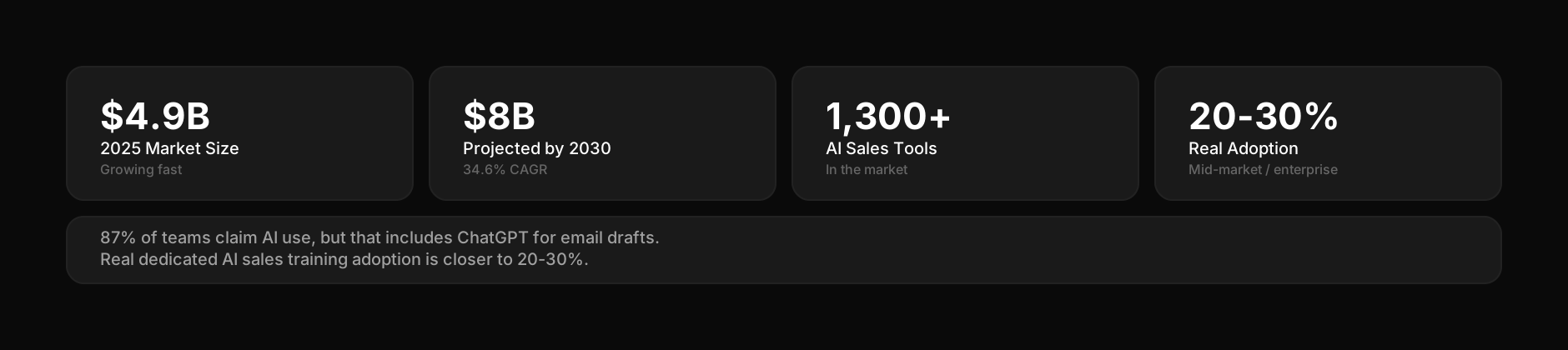
The numbers. The AI sales market hit $4.9 billion in 2025 and is projected to reach $8 billion by 2030. There are now over 1,300 AI sales tools in the market (not all training-specific, but the number keeps growing). 75% of sales teams report using AI in some capacity, up dramatically from 2023. The sales AI market grew at a 34.6% CAGR from 2020 to 2025.
The skepticism on these numbers: "using AI in some capacity" includes reps using ChatGPT to write emails. The actual adoption of structured AI training programs — roleplay platforms with manager dashboards and scoring — is lower. Probably 20-30% of mid-market and enterprise teams, based on what we see in competitive deals.
The adoption reality check. 87% of sales teams say they "use AI" — that's a Salesforce number, and it's technically true, but misleading. Using ChatGPT to rewrite an email is "using AI." That's not the same as running a structured AI training program with roleplay, scoring, and manager dashboards. The real adoption rate for dedicated AI sales training platforms is probably 20-30% of mid-market and enterprise teams. Still growing fast. But not the 87% the headlines suggest.
The convergence trend. The market started with clear categories. Conversation intelligence (Gong, Chorus). Sales engagement (Outreach, Salesloft). Content management (Seismic, Highspot). AI roleplay (Second Nature, Hyperbound). Each category had its lane.
That's breaking down. Gong now offers AI training features. Mindtickle added roleplay. Salesloft bought training capabilities. Everyone's expanding into adjacent territory, and the result for buyers is both good (fewer tools to manage) and bad (features that are "included" but half-baked compared to dedicated solutions).
The "Mech AE" model. Some forward-thinking revenue leaders are rethinking the sales org entirely. The idea is a 50/50 split between human and AI activity: AI handles prospect nurturing at scale, pre-call intelligence gathering, deal risk flagging, and routine follow-ups, while humans focus on relationship building, strategic negotiation, and the judgment calls that close complex deals. Whether you find this exciting or terrifying probably depends on your role.
What this means for buying AI training in 2026: don't over-invest in a standalone point solution that might get absorbed or outflanked in 18 months. Look for platforms that either integrate well with your existing stack (open APIs, CRM connectors, conversation intelligence integrations) or that are part of a broader platform where the training layer benefits from adjacent data. And if you're evaluating SecondBody versus a broader platform like Mindtickle, ask honestly: do you need the whole platform, or do you need deep training that does one thing really well?
The pricing pressure. Conversation intelligence tools like Gong run $100-150/user/month. AI training platforms typically cost $15-50/user/month. As the categories converge, pricing is going to get interesting. Will Gong start offering roleplay at the $150 price point and bundle it in? Will dedicated roleplay platforms raise prices as they add coaching analytics? Our prediction: the standalone roleplay market compresses to $20-40/user/month within two years, while full-stack platforms (enablement + training + intelligence) settle in the $60-100 range. Budget accordingly. Don't sign a 3-year contract at today's prices for a category where pricing is still being figured out.
Common Mistakes Teams Make with AI Sales Training
We've watched enough implementations to see the patterns. Here are the six that kill ROI most often.
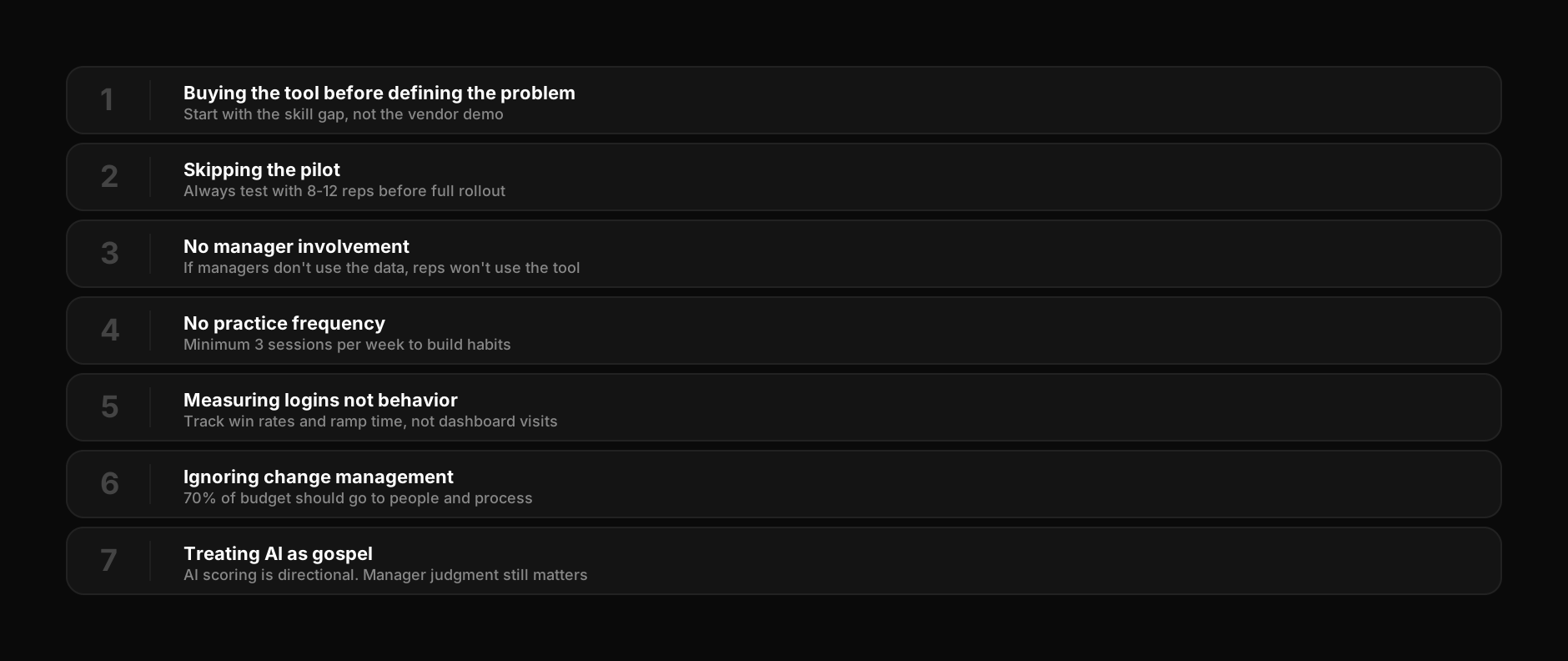
Mistake 1: Buying the tool before defining the methodology. We said this in the implementation section, but it's worth repeating because it's the most common mistake by far. An AI scoring engine needs criteria. If your team doesn't have documented expectations for discovery calls, objection handling, and pitch structure, the platform will score against generic best practices. Generic feedback produces generic results.
Mistake 2: Treating AI practice as optional. "It's there if you want to use it." That positioning kills platforms. The teams that see results treat practice the way sports teams treat drills — it's part of the job, not an extracurricular activity. Mandatory doesn't have to mean punitive. It can mean "bring your last scorecard to every 1:1" or "complete 3 scenarios before your pipeline review." But it can't mean "do it whenever you feel like it."
Mistake 3: Not customizing the AI buyer. Every platform ships with default buyer personas. Most teams never change them. This means your reps are practicing against generic VP personas that don't reflect your actual buyers' industries, pain points, or communication styles. The Reddit consensus on this is clear and consistent across every thread we found: "The tools that work best for our clients are ones where you can customize the AI prospect to match your actual buyer personas." Spend the time on setup. It pays back in every practice session after that.
Mistake 4: Measuring the wrong things. Platform completion rates and badge counts are vanity metrics. They tell you people logged in. They don't tell you performance improved. Measure pipeline conversion, win rates, and ramp time for reps who practice versus reps who don't. If you can't draw a line from practice to revenue, you'll lose budget at the next renewal.
Mistake 5: Ignoring the "offended seller" problem. Let's be real about something. Some salespeople — especially experienced ones — find it insulting to practice against a robot. "I've been selling for 15 years, I don't need to talk to a computer." Forcing them creates resentment. The better approach: start with new hires and mid-performers who actively want to improve, then let top performers engage voluntarily. Once skeptics see their peers improving, some will come around. Some won't. That's okay.
Mistake 6: Cutting human coaching after buying AI training. The trap we named in the comparison section. AI training produces its best ROI when layered on top of human coaching, not as a replacement. The teams that fire their sales trainers and point to the AI platform as the replacement always regret it within two quarters. The AI can't coach on deal politics, customer relationships, or the specific context of why the VP of Procurement went cold after the second meeting. Humans can.
Mistake 7: Ignoring data quality and integration friction. Most AI training platforms promise CRM integration and conversation intelligence connectivity. In practice, "integration" ranges from "we sync call data automatically" to "you can export a CSV and upload it." Before committing, ask the vendor to show you the actual integration with YOUR CRM instance, not a demo environment. The difference matters. Salesforce integration looks different from HubSpot integration, which looks different from Pipedrive, and platforms that treat them all as equivalent are usually mediocre at all three.
Also: the coaching analytics are only as good as the data flowing in. If your CRM data is dirty (and at most companies, it is), the AI's longitudinal analysis will inherit those gaps. Clean data in, useful insights out. Garbage in, confident-sounding garbage out.
How to Implement AI Sales Training: A Step-by-Step Guide
Most implementation guides skip the messy parts. We're not going to do that.
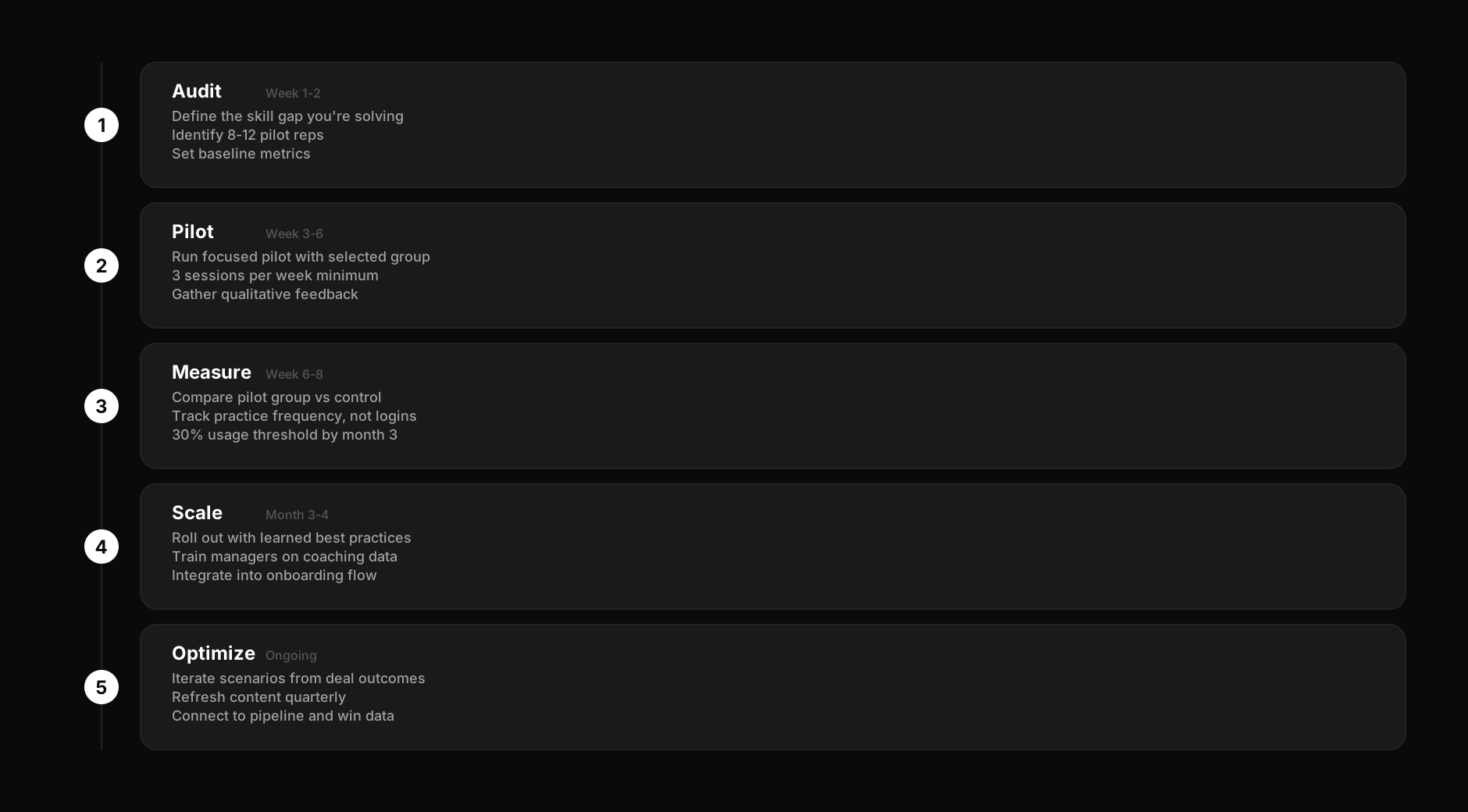
Phase 1: Define what "good" looks like (Week 1-2)
Before you evaluate any platform, document your sales methodology. What does a good discovery call include? What objections come up most? What does your ideal talk-to-listen ratio look like?
If you don't have this documented, stop. Do this first. No AI training platform can score performance against criteria that don't exist.
Common mistake: skipping this step and letting the platform's default scoring criteria define "good." Every platform ships with generic best practices. Generic is fine for generic teams. Your team isn't generic.
Phase 2: Evaluate platforms (Week 2-4)
Pick 2-3 platforms to trial. Test them yourself first. Run 5 practice calls on each and compare the feedback quality.
Things to evaluate that most buyers miss:
Can you customize the AI buyer persona to match your actual customer profiles?
How specific is the feedback? "Improve your discovery" is useless. "You asked 2 open-ended questions; top performers average 7" is useful.
Does it integrate with your CRM and conversation intelligence tool?
What does the manager dashboard actually show?
How does pricing work at scale? Some platforms charge per seat, some per usage, some lock features behind enterprise tiers.
(We wrote a full 13-tool comparison if you want the detailed breakdown across the category.)
Phase 3: Pilot with a small group (Week 4-8)
Don't roll out to the entire team on day one. Pick 8-12 reps. Include a mix of top performers, mid-performers, and new hires. Top performers validate whether the AI feedback is actually good. Mid-performers show you the ROI potential. New hires test the onboarding use case.
Set a practice cadence: 3 sessions per week minimum. Track completion rates.
Common mistake: piloting with only volunteers. Volunteers are already motivated. The pilot needs to include some skeptics, because your rollout will be 60% skeptics.
Phase 4: Roll out with manager reinforcement (Week 8-12)
This is where most implementations succeed or die. The technology is ready. The question is whether your managers will make practice a habit.
Tactics that work:
Tie practice completion to 1:1 agendas. "Show me your last AI practice scorecard" is a simple, powerful question.
Recognize improvement publicly. Not the highest scores — the biggest improvements.
Have managers practice too. Nothing kills adoption faster than a manager who assigns AI training they've never used themselves.
The Reddit user who said "just got to get leadership to buy into it" identified the entire implementation challenge in one sentence.
Phase 5: Measure and iterate (Month 3+)
Compare your pilot group's performance against a control group. Look at:
Ramp time (new hires in pilot vs control)
Conversion rates (practice users vs non-users)
Specific skill scores over time (objection handling, discovery depth)
Platform usage trends (are people still logging in after month 2?)
If usage drops below 30% by month 3, you have a culture problem, not a technology problem. Solve the culture problem first.
Frequently Asked Questions
What are some good AI tools for sales training?
The category has expanded fast. The platforms we'd consider credible based on actual user feedback, product depth, and market presence include Second Nature (strong on high-fidelity simulation), Hyperbound (focused on cold call practice with custom personas), Mindtickle (broad readiness platform with AI roleplay built in), PitchMonster (affordable, good for rejection handling practice), and SecondBody (that's us — unlimited AI coaching with Rory, strong on real-time feedback, honest limitations: we're younger and the public customer list is smaller than the incumbents). There's a full 13-tool comparison here with pricing and honest pros and cons.
What is the role of AI in virtual sales training?
AI serves three roles in virtual training: it acts as the practice partner (simulating buyers), the coach (analyzing performance and giving feedback), and the measurement system (tracking skill development over time). In virtual-first sales teams, AI fills the gap that in-office ride-alongs used to fill. Reps can practice remotely, asynchronously, at 10pm if that's when they're motivated. The 24/7 availability is genuinely useful for distributed teams across time zones.
How much does AI sales training cost?
Wide range. AI roleplay-focused tools run $15-50/user/month. Full enablement platforms with AI training built in (Mindtickle, Allego, Seismic) run $30-80/user/month, but they bundle content management, analytics, and certifications. Conversation intelligence tools like Gong are $100-150/user/month but solve a different problem (post-call analysis, not pre-call practice). Enterprise deals with custom integrations can run $50K-200K+ annually.
Can AI replace human sales coaches?
No. Not yet. Maybe not ever for the parts that matter most. AI is excellent at repetitive practice, consistent scoring, and identifying patterns across data. Humans are better at reading emotional dynamics, understanding deal politics, providing empathy, and coaching on the subjective judgment calls that close complex enterprise deals. The Reddit consensus is clear on this one: "AI still can't fully replicate the awkward silences, weird tangents, and emotional dynamics of real conversations." Use AI for volume. Use humans for depth.
How long does it take to see results from AI sales training?
Most vendors cite 60-90 days for measurable impact. The Qualfon study showed significant gains at 30 days with compounding improvement through 90 days. In our experience, you'll see practice adoption (or lack thereof) in the first 2 weeks, initial skill score improvements in 30 days, and pipeline impact in 60-90 days. But the caveat applies: those timelines assume 70%+ weekly active usage. If your team isn't practicing, no amount of waiting produces results.
Is AI sales training worth it for small teams?
For teams under 5 reps, probably not. A good manager's time is more valuable and more contextual than any AI platform. For teams of 10-20 reps, it starts making sense — the manager can't observe enough calls to coach everyone effectively. For teams of 50+, it's close to essential. The consistency and scalability gap between what managers can provide and what the team needs becomes impossible to bridge with humans alone.
How to use AI for sales training effectively?
Three things matter more than which platform you pick. First, customize the AI buyer to match your actual customer profiles — generic practice doesn't transfer to real calls. Second, make practice a team habit, not an individual option. Tie it to 1:1s and pipeline reviews. Third, measure pipeline impact (conversion rates, win rates, ramp time), not platform activity (logins, badges completed). The teams that treat AI training as a drill program instead of an optional resource are the teams that see the ROI numbers everyone quotes.
What is the role of AI in virtual sales training?
In remote-first and hybrid teams, AI fills the coaching gap that physical proximity used to solve. Before AI, virtual sales training meant scheduled Zoom workshops (which reps skipped), recorded courses (which reps skimmed), and the occasional manager call review (which covered maybe 5% of calls). AI sales training gives distributed reps on-demand practice at any hour, in any time zone, with instant feedback. The 24/7 availability matters more for virtual teams than office-based ones. A rep in Singapore and a rep in Chicago can both practice the same scenario at 9pm their local time. No scheduling required. No calendar invite. No waiting.
Where can I find AI live sales training?
Most AI sales training platforms offer self-serve access. You can start a free trial or demo on the vendor's website and run practice sessions within minutes. SecondBody, Hyperbound, PitchMonster, and SalesDojo all offer trial access without requiring a sales call first. For platforms like Mindtickle and Allego, you'll typically need to go through a sales process and enterprise evaluation before accessing the product. If you want to try AI roleplay today without a procurement process, start with one of the self-serve options and run 5-10 practice calls to see whether the feedback quality meets your expectations.
Does AI sales training work for enterprise sales, not just transactional selling?
Yes, but the value shows up differently. For transactional sales (high volume, lower ACV), AI training's biggest impact is on call volume practice and ramp speed. For enterprise sales (long cycles, complex stakeholder maps), the value is in preparing for specific high-stakes conversations. An enterprise AE might only use the platform twice a week, but those two sessions are laser-focused: rehearsing the economic buyer pitch, practicing the CFO objection, refining the executive summary. The ROI per session is higher even if the frequency is lower. The platforms that handle enterprise well let you build multi-call sequences — not just a single cold call, but a full discovery-to-close arc.
We wrote this guide so you could understand the category clearly — not so you'd feel obligated to pick us. If another platform on this list is a better fit for your team's size, budget, and existing stack, go buy that one. If you want to see what practice with Rory feels like, the trial is on our site. Either way, practice more. The reps who practice are the reps who win. That part isn't controversial.